Sequence Markets
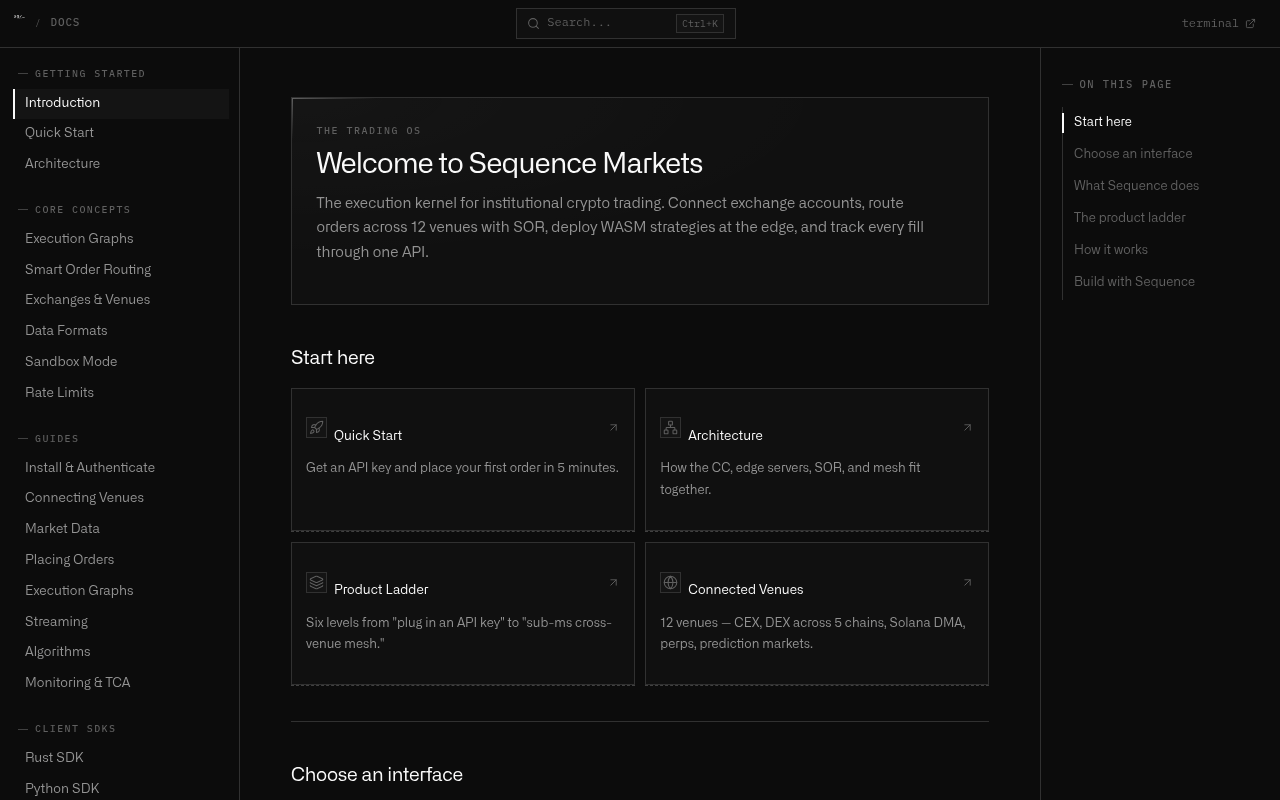
Sequence Markets is a Y Combinator (Winter 2026) trading operating system for institutional crypto that provides unified execution infrastructure across 12 fragmented digital-asset venues — centralized exchanges (Coinbase, Binance, Kraken, OKX, Bybit, Bitget, Crypto.com, Hyperliquid), DeFi, and prediction markets (Kalshi, Polymarket). It packages one market view into a single trade via a smart order router (SOR), execution graphs, and WASM-compiled algo strategies deployed to multi-region low-latency edges. Developers access it through a Bearer-auth REST API and multiplexed WebSocket streams, a Python SDK, a Rust SDK, an Algo SDK, a `sequence` CLI, and an MCP interface for human, algorithmic, and agent workflows, with a full paper-trading sandbox, smart order routing, and transaction-cost analytics (TCA).
Sequence Markets is listed with 1 API on the APIs.io network. Tagged areas include Company, Trading, Cryptocurrency, Digital Assets, and Execution.
The Sequence Markets catalog on APIs.io includes 1 event-driven AsyncAPI specification.
Sequence Markets’ developer surface includes documentation, API reference, getting-started guide, signup flow, authentication, CLI, sandbox, and 21 more developer resources.
Kin Score
 Kin Score
How this is scored →
Kin Score
How this is scored →scored 2026-10-17 · rubric v0.24.0
APIs 1
Individual APIs this provider publishes, each with its own machine-readable definition.
Sequence Markets Trading API
Bearer-auth REST API and multiplexed WebSocket streaming surface for the Sequence Markets trading OS — credentials & wallets, market data, orders & execution graphs, positions &...
Event Specifications 1
AsyncAPI definitions for this provider's event-driven and streaming APIs.
Sequence Markets Streaming API
Multiplexed WebSocket streaming surface for the Sequence Markets trading OS, generated faithfully from the documented channel catalog at docs.sequencemkts.com/api/streaming. Not...
ASYNCAPISecurity Posture 2
Authentication, domain security, vulnerability disclosure, and trust-center signals.
Resources
Get Started 4
Portal, sign-up, and the first successful call
Documentation 3
Reference material describing how the API behaves
Agent Surfaces 4
MCP servers, agent skills, and machine-readable catalogs
Design & Contract 7
Pagination, idempotency, versioning, errors, and events
Scroll for all 7
Build 4
SDKs, sample code, and the tooling you integrate with
Access & Security 2
Authentication, authorization, and security posture
Operate 1
Status, limits, changes, and where to get help
Commercial 2
Pricing, plans, and the legal terms of use
Company 1
The organization behind the API
Source (apis.yml)
Work with this as data
Every provider here is available over the APIs.io API and to AI agents over MCP.