
Hypernative
Hypernative is an institutional-grade Web3 and onchain security platform that detects and prevents blockchain threats before they cause damage. It combines real-time monitoring, machine-learning detection, simulation and graph-based analysis across 70+ chains with automated onchain response, covering over 300 risk types including smart contract exploits, bridge incidents, frontend compromises, private key theft, market manipulation and governance attacks. The platform is delivered as five products — the Hypernative Platform (onchain monitoring and automated response), Guardian / Transaction Guard (pre-signature transaction simulation and policy enforcement), Screener (cross-chain address reputation and risk scoring), Wallet Protect (end-user wallet threat prevention), and Fraud Prevention — and integrates into customer operations through UI, REST API, SDK and webhook paths served from api.hypernative.xyz. Hypernative reports securing $100B+ in onchain assets for 250+ customers including chains, protocols, exchanges, custodians, asset managers, stablecoin issuers and financial institutions.
Hypernative is listed with 1 API on the APIs.io network. Tagged areas include Company, Security, Blockchain, Web3, and Threat Detection.
The Hypernative catalog on APIs.io includes 1 event-driven AsyncAPI specification.
Hypernative’s developer surface includes documentation, engineering blog, support, and 13 more developer resources.
Kin Score
 Kin Score
How this is scored →
Kin Score
How this is scored →scored 2026-10-23 · rubric v0.25.0
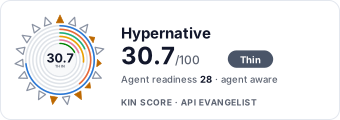 It updates itself when the score changes. Paste this where you link to your API docs:
<a href="https://apis.io/providers/hypernative/"><img src="https://apis.io/badge/hypernative/card.svg" alt="Hypernative on APIs.io — Kin Score by API Evangelist"></a>Other styles, a README pill and a shields.io endpoint are on the badge page.
Markets this provider is in provisional
The Kin Score Market layer reads a provider inside its market: its position, and how deep its integrations go. Depth is only comparable within a position. Provisional and unweighted: not part of the Kin Score or agent readiness.
| Market | Position | Depth | Registered MCP server | Declares compatibility |
|---|---|---|---|---|
| LF Decentralized Trust (Hyperledger) Members and Projects (enterprise blockchain, digital identity, CBDC) | undeclared | - | - | - |
Registered MCP server and declares compatibility are report only — not weighted. Undeclared means we found nothing we can read, so there is no number: we never infer integrations.
APIs 1
Individual APIs this provider publishes, each with its own machine-readable definition.
Hypernative API
The Hypernative REST API exposes the platform's monitoring, detection, screening and automated-response surface — including Screener address reputation (/assets/reputation/addre...
Pricing Plans 1
Published pricing tiers and plan structures.
Rate Limits 1
Documented rate limits and quota policies.
Hypernative Rate Limits
RATE LIMITSEvent Specifications 1
AsyncAPI definitions for this provider's event-driven and streaming APIs.
Hypernative Webhooks
ASYNCAPISecurity Posture 2
Authentication, domain security, vulnerability disclosure, and trust-center signals.
Resources
Get Started 1
Portal, sign-up, and the first successful call
Documentation 1
Reference material describing how the API behaves
Agent Surfaces 1
MCP servers, agent skills, and machine-readable catalogs
Design & Contract 3
Pagination, idempotency, versioning, errors, and events
Build 2
SDKs, sample code, and the tooling you integrate with
Access & Security 1
Authentication, authorization, and security posture
Operate 3
Status, limits, changes, and where to get help
Commercial 2
Pricing, plans, and the legal terms of use
Company 2
The organization behind the API
Source (apis.yml)
Work with this as data
Every provider here is available over the APIs.io API and to AI agents over MCP.