
DataVisor
DataVisor is a Mountain View, California fraud and risk platform company founded in 2013 that applies unsupervised machine learning, rules, device intelligence and link analysis to detect fraud and financial crime in real time for banks, credit unions, fintechs, digital payments, life insurance and digital enterprises. The platform covers ACH and wire fraud, account onboarding, application fraud, account takeover, card fraud, check fraud, FinCrime/AML and promotion abuse, and is delivered as an API-integrated detection engine: customers stream events to a DataVisor integration endpoint over real-time synchronous HTTPS REST (TLS 1.2) or batch/cloud-bucket pipes, and consume detection results, scores and reason codes back through APIs or bucket push. Named product modules include the Fraud and Risk Platform, the dEdge device intelligence SDK and WebAPI, dOps fraud and risk operations, dVecto managed ML detection, the UML Modeling Studio and the Vera conversational AI agent. API references and the integration guide are published publicly, but the API guide itself, the detailed endpoint documentation and the admin console are gated behind customer accounts and technical account managers.
DataVisor is listed with 2 APIs on the APIs.io network. Tagged areas include Company, Fraud Prevention, AML, Financial Crime, and Risk Management.
DataVisor’s developer surface includes pricing, documentation, API reference, support, engineering blog, authentication, and 14 more developer resources.
Kin Score
 Kin Score
How this is scored →
Kin Score
How this is scored →scored 2026-10-23 · rubric v0.25.0
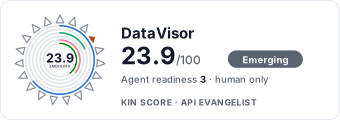 It updates itself when the score changes. Paste this where you link to your API docs:
<a href="https://apis.io/providers/datavisor/"><img src="https://apis.io/badge/datavisor/card.svg" alt="DataVisor on APIs.io — Kin Score by API Evangelist"></a>Other styles, a README pill and a shields.io endpoint are on the badge page.
APIs 2
Individual APIs this provider publishes, each with its own machine-readable definition.
DataVisor Fraud and Risk Platform API
Real-time fraud and risk detection API surface. Customers stream user events and transactions to a DataVisor integration endpoint and receive detection results, risk scores and ...
DataVisor dEdge Device Intelligence WebAPI
Device intelligence surface. The dEdge SDK is embedded in an iOS app, Android app or HTML5 web page, sends encrypted device data to the dEdge server, and receives a device token...
Pricing Plans 1
Published pricing tiers and plan structures.
Security Posture 2
Authentication, domain security, vulnerability disclosure, and trust-center signals.
Resources
Documentation 2
Reference material describing how the API behaves
Agent Surfaces 1
MCP servers, agent skills, and machine-readable catalogs
Design & Contract 2
Pagination, idempotency, versioning, errors, and events
Access & Security 3
Authentication, authorization, and security posture
Operate 1
Status, limits, changes, and where to get help
Commercial 4
Pricing, plans, and the legal terms of use
Company 6
The organization behind the API
Other 1
Properties that don't map to a standard resource type
Source (apis.yml)
Work with this as data
Every provider here is available over the APIs.io API and to AI agents over MCP.