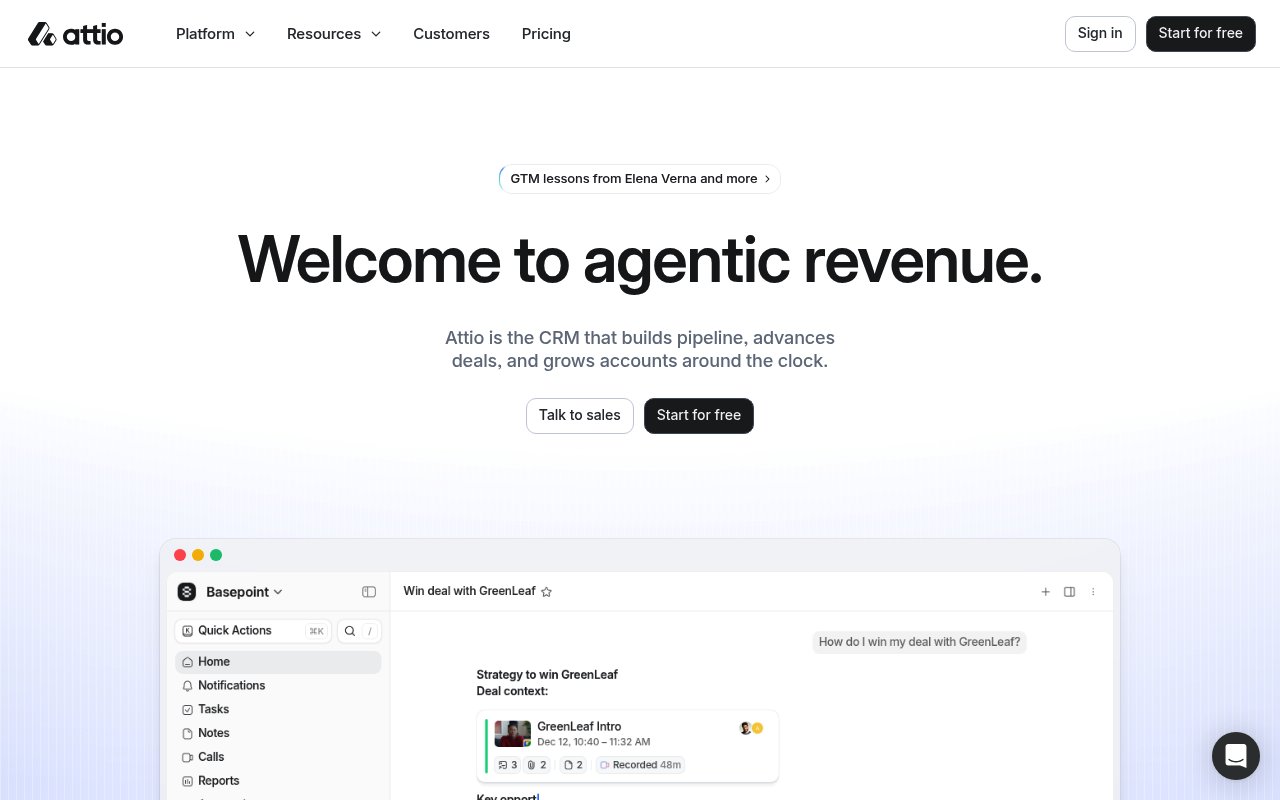
Attio
Attio is a modern, flexible, and data-driven customer relationship management (CRM) platform that lets revenue teams build a CRM around their unique data model with customizable objects, attributes, lists, and workflows. Attio syncs contacts and companies from email and calendar, enriches them with data, and powers reporting, sequences, and automations. The Attio REST API exposes full CRUD access to records, lists, objects, attributes, tasks, notes, threads, comments, and webhooks using Bearer token authentication and a public OpenAPI specification.
Attio publishes 17 APIs on the APIs.io network, including Attributes API, Call Recordings API, Comments API, and 14 more. Tagged areas include CRM, Sales, Contacts, Companies, and Pipelines.
Attio’s developer surface includes authentication, documentation, pricing, signup flow, and 11 more developer resources.
Kin Score
 Kin Score
How this is scored →
Kin Score
How this is scored →scored 2026-09-25 · rubric v0.23.0
APIs 17
Individual APIs this provider publishes, each with its own machine-readable definition.
Attio Attributes API
The Attributes API from Attio — 2 operation(s) for attributes.
Attio Call Recordings API
The Call Recordings API from Attio — 1 operation(s) for call recordings.
Attio Comments API
The Comments API from Attio — 2 operation(s) for comments.
Attio Entries API
The Entries API from Attio — 1 operation(s) for entries.
Attio Files API
The Files API from Attio — 1 operation(s) for files.
Attio Lists API
The Lists API from Attio — 2 operation(s) for lists.
Attio Meetings API
The Meetings API from Attio — 2 operation(s) for meetings.
Attio Meta API
The Meta API from Attio — 1 operation(s) for meta.
Attio Notes API
The Notes API from Attio — 1 operation(s) for notes.
Attio Objects API
The Objects API from Attio — 2 operation(s) for objects.
Attio Records API
The Records API from Attio — 3 operation(s) for records.
Attio Tasks API
The Tasks API from Attio — 1 operation(s) for tasks.
Attio Threads API
The Threads API from Attio — 1 operation(s) for threads.
Attio Webhooks API
The Webhooks API from Attio — 2 operation(s) for webhooks.
Attio Workspace Members API
The Workspace Members API from Attio — 2 operation(s) for workspace members.
Attio List Entries API
Entries within a list, referencing a parent record.
Attio O Auth API
The OAuth API from Attio — 2 operation(s) for oauth.
Scroll for all 17
Open Collections 20
Open, tool-agnostic API collections (OpenAPI-derived and Bruno).
API Collection
OPEN COLLECTIONAttio REST Attributes API
OPEN COLLECTIONAttio REST Attributes Call Recordings API
OPEN COLLECTIONAttio REST API
OPEN COLLECTIONAttio REST Attributes Comments API
OPEN COLLECTIONAttio REST Attributes Entries API
OPEN COLLECTIONAttio REST Attributes Files API
OPEN COLLECTIONAttio REST Attributes List Entries API
OPEN COLLECTIONAttio REST Attributes Lists API
OPEN COLLECTIONAttio REST Attributes Meetings API
OPEN COLLECTIONAttio REST Attributes Meta API
OPEN COLLECTIONAttio REST Attributes Notes API
OPEN COLLECTIONAttio REST Attributes OAuth API
OPEN COLLECTIONAttio REST Attributes Objects API
OPEN COLLECTIONAttio REST Attributes Records API
OPEN COLLECTIONAttio REST Attributes Tasks API
OPEN COLLECTIONAttio REST Attributes Threads API
OPEN COLLECTIONAttio REST Attributes Webhooks API
OPEN COLLECTIONAttio REST Attributes Workspace Members API
OPEN COLLECTIONAttio REST API
OPEN COLLECTIONScroll for all 20
Pricing Plans 1
Published pricing tiers and plan structures.
Attio Plans Pricing
PLANSRate Limits 1
Documented rate limits and quota policies.
Attio Rate Limits
RATE LIMITSFinOps 1
Cost, billing, and metering signals for API financial operations.
Attio Finops
FINOPSSecurity Posture 2
Authentication, domain security, vulnerability disclosure, and trust-center signals.
Scopes 1
OAuth scopes governing access to this provider's APIs.
Agentic Access 1
Recommended x-agentic-access execution contracts for AI agents.
Resources
Get Started 1
Portal, sign-up, and the first successful call
Documentation 1
Reference material describing how the API behaves
Agent Surfaces 2
MCP servers, agent skills, and machine-readable catalogs
Build 1
SDKs, sample code, and the tooling you integrate with
Access & Security 3
Authentication, authorization, and security posture
Operate 1
Status, limits, changes, and where to get help
Commercial 3
Pricing, plans, and the legal terms of use
Company 2
The organization behind the API
Other 1
Properties that don't map to a standard resource type
Source (apis.yml)
Work with this as data
Every provider here is available over the APIs.io API and to AI agents over MCP.