
Anvilogic
Anvilogic is an Agentic SecOps platform founded in 2019 by former SOC practitioners. It runs AI automation across the security operations lifecycle — onboarding, federated search, detection engineering, and triage & investigation — on top of the SIEMs, data lakes, and storage services a security team already operates, without requiring data migration. An AI Operating System coordinates task-scoped agents over an enterprise security graph, and Blueprints chains those agents into repeatable, human-approved workflows. The platform integrates with Splunk, Snowflake, Databricks, Microsoft Sentinel, Elastic, CrowdStrike, Amazon S3, and dozens of EDR, SOAR, and workflow tools. Anvilogic exposes an OAuth 2.1 protected Model Context Protocol (MCP) server so agents and customer-configured MCP connectors can call platform tools directly.
Anvilogic is listed with 2 APIs on the APIs.io network. Tagged areas include Company, Security, Cybersecurity, Security Operations, and Detection Engineering.
Anvilogic’s developer surface includes documentation, getting-started guide, engineering blog, signup flow, pricing, support, authentication, and 20 more developer resources.
Kin Score
 Kin Score
How this is scored →
Kin Score
How this is scored →scored 2026-10-23 · rubric v0.25.0
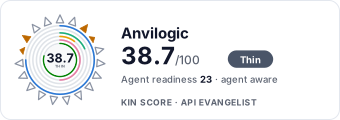 It updates itself when the score changes. Paste this where you link to your API docs:
<a href="https://apis.io/providers/anvilogic/"><img src="https://apis.io/badge/anvilogic/card.svg" alt="Anvilogic on APIs.io — Kin Score by API Evangelist"></a>Other styles, a README pill and a shields.io endpoint are on the badge page.
APIs 2
Individual APIs this provider publishes, each with its own machine-readable definition.
Anvilogic MCP Server
The Anvilogic MCP Server is the platform's Model Context Protocol surface, letting AI agents and MCP clients call Anvilogic platform tools against a customer's security graph, d...
Anvilogic Platform Authorization API
The OAuth 2.1 authorization surface for the Anvilogic platform, advertised at the RFC 8414 /.well-known/oauth-authorization-server document on secure.anvilogic.com. It supports ...
MCP Servers 1
Model Context Protocol servers that expose these APIs to AI agents.
Pricing Plans 1
Published pricing tiers and plan structures.
Security Posture 3
Authentication, domain security, vulnerability disclosure, and trust-center signals.
Anvilogic Trust Center
SOC 2, SOC 2 Type 2, ISO 27001, ISO/IEC 27001:2022, Data Privacy Framework, CSA AI Trustworthy Pledge
SECURITYResources
Get Started 4
Portal, sign-up, and the first successful call
Documentation 1
Reference material describing how the API behaves
Agent Surfaces 3
MCP servers, agent skills, and machine-readable catalogs
Design & Contract 3
Pagination, idempotency, versioning, errors, and events
Build 2
SDKs, sample code, and the tooling you integrate with
Access & Security 4
Authentication, authorization, and security posture
Operate 2
Status, limits, changes, and where to get help
Commercial 4
Pricing, plans, and the legal terms of use
Company 3
The organization behind the API
Other 1
Properties that don't map to a standard resource type
Source (apis.yml)
Work with this as data
Every provider here is available over the APIs.io API and to AI agents over MCP.