
Uberduck
Uberduck is an AI voice platform whose public REST API converts text into natural-sounding speech across a catalog of voices and provider-backed models (AWS Polly, Google Cloud, Azure), lists and filters those voices, creates instant zero-shot voice clones from reference audio, and mints LiveKit tokens for real-time conversational AI voice calls. The API is HTTPS request/response with Bearer API-key authentication. It is self-serve but gated behind a paid plan - API access is a feature of the Creator plan and above. Uberduck's earlier AI music / rap-vocals API surface is no longer part of the published API; the current documented product (OpenAPI version 0.1.0) is focused on text-to-speech, voices, and conversational voice.
Uberduck publishes 4 API contracts indexed on the APIs.io network, including Conversational API, Models API, Text-to-Speech API, and 1 more. Tagged areas include Artificial Intelligence, Text-to-Speech, Voice, Voice Cloning, and Speech Synthesis.
Uberduck’s developer surface includes engineering blog, authentication, documentation, API reference, and 7 more developer resources.
Kin Score
 Kin Score
How this is scored →
Kin Score
How this is scored →scored 2026-10-23 · rubric v0.25.0
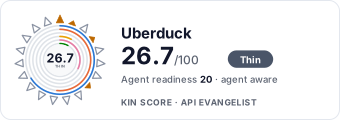 It updates itself when the score changes. Paste this where you link to your API docs:
<a href="https://apis.io/providers/uberduck/"><img src="https://apis.io/badge/uberduck/card.svg" alt="Uberduck on APIs.io — Kin Score by API Evangelist"></a>Other styles, a README pill and a shields.io endpoint are on the badge page.
APIs 4
Individual APIs this provider publishes, each with its own machine-readable definition.
Uberduck Conversational API
Mint LiveKit tokens for real-time conversational AI voice calls.
Uberduck Models API
List available text-to-speech models by provider.
Uberduck Text-to-Speech API
Synthesize speech from text using a chosen voice and model.
Uberduck Voices API
List, filter, and clone voices.
Open Collections 5
Open, tool-agnostic API collections (OpenAPI-derived and Bruno).
Uberduck Text To Speech Conversational API
OPEN COLLECTIONUberduck Text To Speech Conversational Models API
OPEN COLLECTIONUberduck Text To Speech Conversational Text-to-Speech API
OPEN COLLECTIONUberduck Text To Speech Conversational Voices API
OPEN COLLECTIONUberduck Text To Speech API
OPEN COLLECTIONPricing Plans 1
Published pricing tiers and plan structures.
Rate Limits 1
Documented rate limits and quota policies.
Uberduck Rate Limits
RATE LIMITSFinOps 1
Cost, billing, and metering signals for API financial operations.
Uberduck Finops
FINOPSSecurity Posture 2
Authentication, domain security, vulnerability disclosure, and trust-center signals.
Agentic Access 1
Recommended x-agentic-access execution contracts for AI agents.
Resources
Documentation 2
Reference material describing how the API behaves
Agent Surfaces 1
MCP servers, agent skills, and machine-readable catalogs
Access & Security 2
Authentication, authorization, and security posture
Operate 1
Status, limits, changes, and where to get help
Commercial 2
Pricing, plans, and the legal terms of use
Company 3
The organization behind the API
Source (apis.yml)
Work with this as data
Every provider here is available over the APIs.io API and to AI agents over MCP.