OpenEvidence
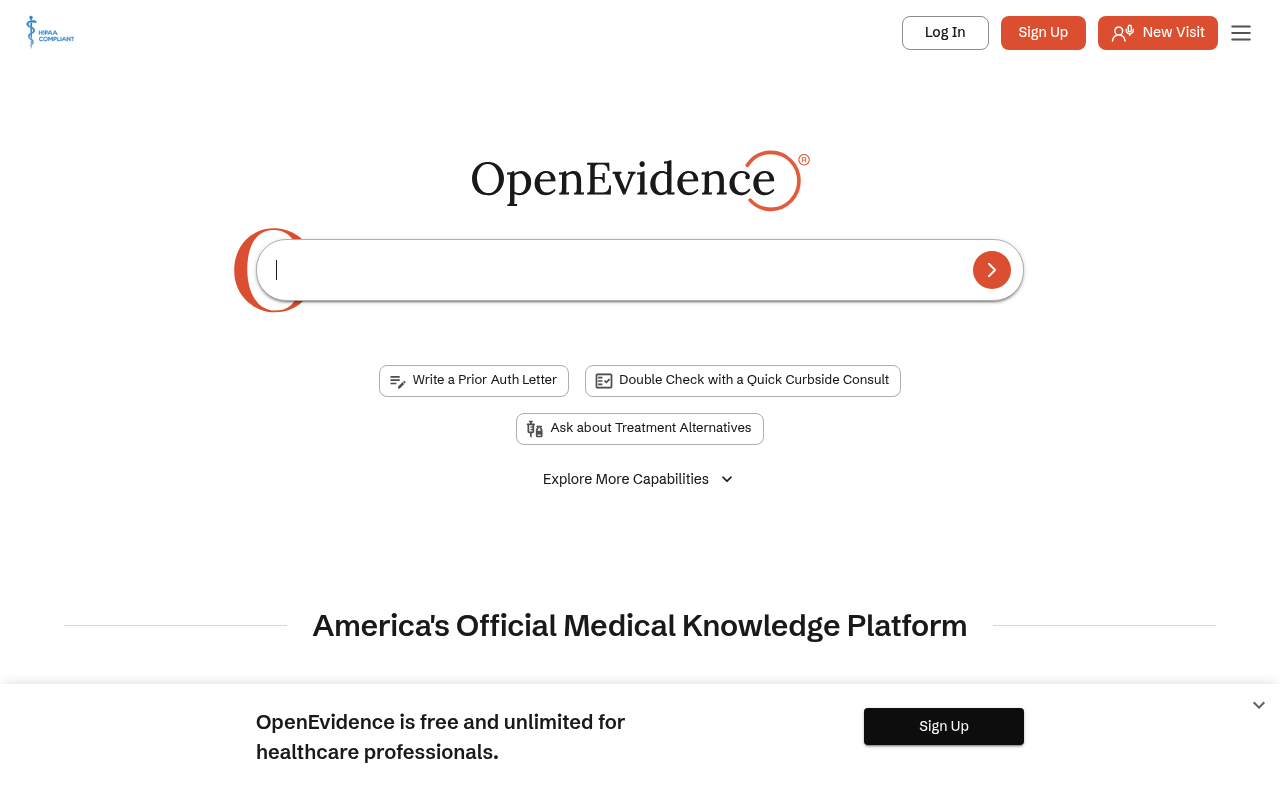
OpenEvidence is a clinical decision-support search platform that uses generative AI grounded in peer-reviewed medical literature to answer clinical questions for verified clinicians. The product is free for U.S. licensed clinicians and is monetized through pharmaceutical advertising; partnerships include the New England Journal of Medicine, JAMA, NCCN, and the Cochrane Library. As of 2026 it serves more than 860,000 verified clinicians. OpenEvidence does not currently expose a public self-service developer API.
OpenEvidence is profiled on the APIs.io network. Tagged areas include Healthcare, Clinical Decision Support, Medical AI, Generative AI, and Evidence-Based Medicine.
OpenEvidence’s developer surface includes signup flow, engineering blog, authentication, and 11 more developer resources.
Kin Score
 Kin Score
How this is scored →
Kin Score
How this is scored →scored 2026-10-17 · rubric v0.24.0
Features 6
Notable capabilities this provider offers.
Evidence-Grounded Search
AI-powered medical search that returns answers grounded in peer-reviewed medical literature with inline citations.
Voice Mode
Hands-free voice interface allowing clinicians to ask clinical questions and receive spoken, evidence-based answers across web and mobile.
Visits
Real-time clinical intelligence delivered during the patient visit.
AI Medical Coding
Generative-AI feature that supports medical coding workflows.
Clinician Verification
Account access restricted to verified U.S. licensed healthcare professionals.
Mobile and Web
Available as web and mobile applications, free for verified clinicians.
Security Posture 3
Authentication, domain security, vulnerability disclosure, and trust-center signals.
Use Cases 3
What developers build with this provider.
Point-of-Care Decision Support
Clinicians query OpenEvidence at the point of care for diagnostic, therapeutic, and management questions.
Medical Education
Use by medical residents and trainees for evidence lookup.
Coding and Documentation
AI medical coding workflows for revenue-cycle support.
Resources
Get Started 2
Portal, sign-up, and the first successful call
Build 1
SDKs, sample code, and the tooling you integrate with
Access & Security 5
Authentication, authorization, and security posture
Operate 1
Status, limits, changes, and where to get help
Company 8
The organization behind the API
Scroll for all 8
Other 3
Properties that don't map to a standard resource type
Source (apis.yml)
Work with this as data
Every provider here is available over the APIs.io API and to AI agents over MCP.