M1 Finance
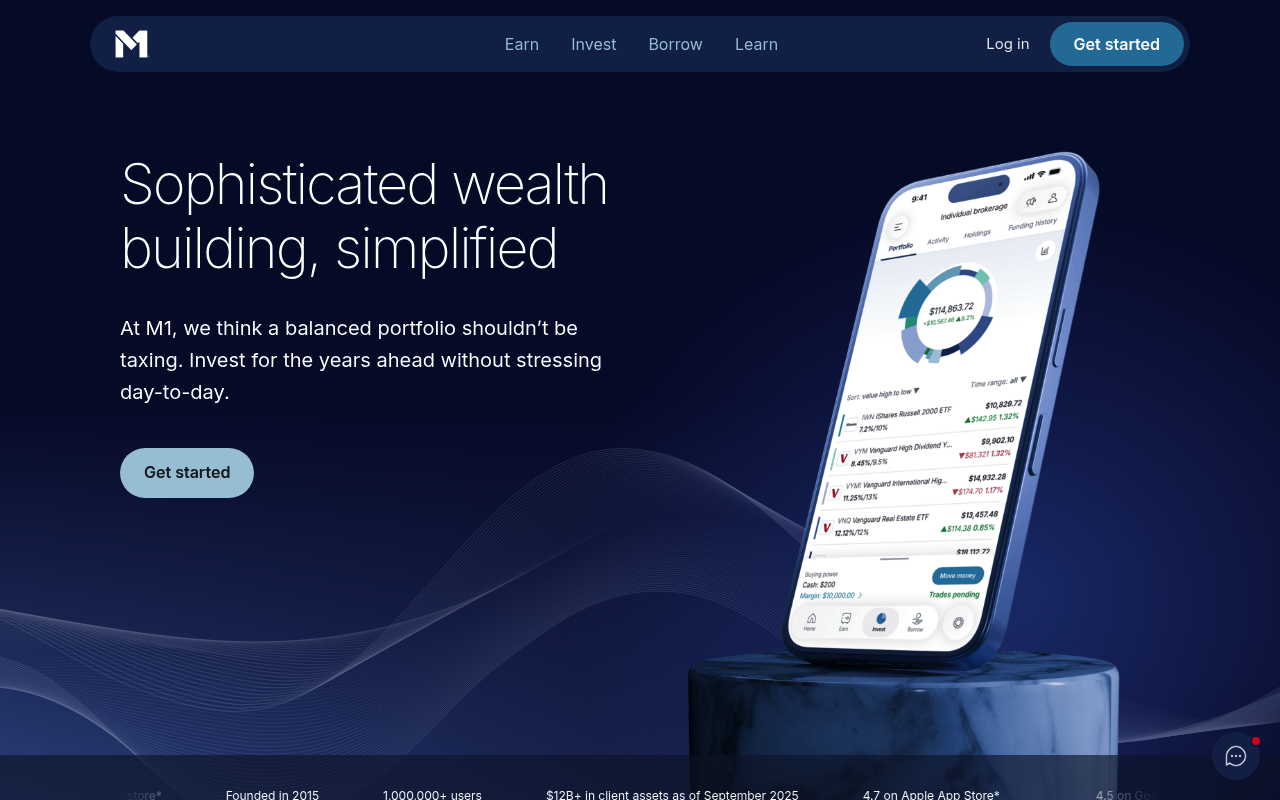
M1 Finance is an automated investing platform offering fractional share portfolio management, smart money movement, margin borrowing, and integrated banking and credit features. The platform combines self-directed and automated investing through its Pies system, commission-free trading, a portfolio line of credit (M1 Borrow), high-yield cash accounts (M1 Earn), and a rewards credit card. M1 uses a GraphQL API gateway internally across 17+ microservices built on Scala and TypeScript to power its Finance Super App experience.
M1 Finance is listed with 3 APIs on the APIs.io network. Tagged areas include Investing, Fintech, Fractional Shares, Portfolio Management, and Robo-Advisor.
M1 Finance’s developer surface includes documentation, engineering blog, pricing, and 9 more developer resources.
Kin Score
 Kin Score
How this is scored →
Kin Score
How this is scored →scored 2026-10-17 · rubric v0.24.0
APIs 3
Individual APIs this provider publishes, each with its own machine-readable definition.
M1 Invest
M1 Invest provides automated fractional share portfolio management using the Pies system, allowing users to set target allocations across stocks and ETFs with dynamic rebalancin...
M1 Borrow
M1 Borrow provides a portfolio line of credit (margin loans) allowing users to borrow up to 50% of their eligible brokerage portfolio value at a competitive variable rate that t...
M1 Earn
M1 Earn offers high-yield cash accounts for individuals and joint account holders with 3.10% APY and FDIC insurance coverage up to $4.75 million aggregate through program banks,...
GraphQL 1
GraphQL schemas published by this provider.
M1 Finance GraphQL API
M1 Finance is a Finance Super App that uses a GraphQL API gateway internally across 17+ microservices built on Scala and TypeScript. The platform does not expose a public or par...
GRAPHQLPricing Plans 1
Published pricing tiers and plan structures.
Rate Limits 1
Documented rate limits and quota policies.
M1 Finance Rate Limits
RATE LIMITSFinOps 1
Cost, billing, and metering signals for API financial operations.
M1 Finance Finops
FINOPSSecurity Posture 1
Authentication, domain security, vulnerability disclosure, and trust-center signals.
Resources
Documentation 1
Reference material describing how the API behaves
Build 1
SDKs, sample code, and the tooling you integrate with
Access & Security 1
Authentication, authorization, and security posture
Operate 2
Status, limits, changes, and where to get help
Commercial 3
Pricing, plans, and the legal terms of use
Company 3
The organization behind the API
Other 1
Properties that don't map to a standard resource type
Source (apis.yml)
Work with this as data
Every provider here is available over the APIs.io API and to AI agents over MCP.