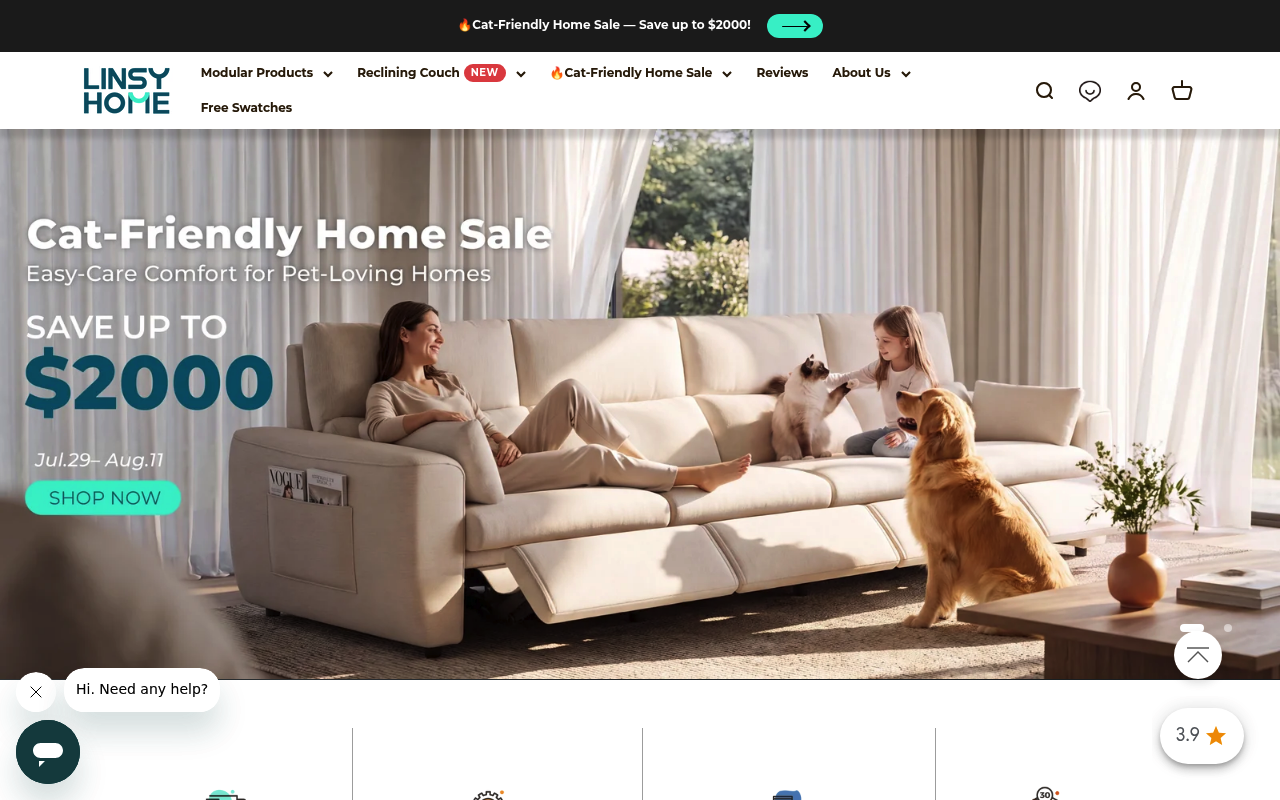
Linsy
Linsy (LINSY HOME) is a direct-to-consumer modular furniture brand founded in 2007, selling True Modular sofas, sectionals, reclining couches, modular storage cabinets, replacement covers and accessories to households in the United States and other markets from U.S. warehouse fulfillment. Linsy operates two Shopify storefronts — www.linsyhome.com and linsy.com — and both expose a machine-readable agent surface: a published llms.txt/agents.md, a Universal Commerce Protocol (UCP) merchant profile at /.well-known/ucp, an MCP endpoint for agent-driven catalog search, cart, checkout and fulfillment, and OpenID Connect discovery for Shopify customer accounts. Linsy was surfaced as a portfolio company of Hongshan.
Linsy is listed with 2 APIs on the APIs.io network. Tagged areas include Company, Consumer, Retail, E-Commerce, and Furniture.
Linsy’s developer surface includes developer portal, signup flow, support, engineering blog, authentication, and 15 more developer resources.
Kin Score
 Kin Score
How this is scored →
Kin Score
How this is scored →scored 2026-10-17 · rubric v0.24.0
APIs 2
Individual APIs this provider publishes, each with its own machine-readable definition.
LINSY HOME UCP Commerce API (MCP)
The Universal Commerce Protocol (UCP) agent-commerce surface for the LINSY HOME storefront (www.linsyhome.com, Shopify shop linsy-home.myshopify.com). Agents discover the mercha...
Linsy Official Store UCP Commerce API (MCP)
The Universal Commerce Protocol (UCP) agent-commerce surface for the Linsy official storefront (linsy.com, Shopify shop linsyofficial.myshopify.com). Same UCP shopping service a...
MCP Servers 1
Model Context Protocol servers that expose these APIs to AI agents.
Linsy UCP Commerce MCP
Linsy publishes a live Model Context Protocol endpoint on each of its storefronts as the transport for the Universal Commerce Protocol (UCP) shopping service. Agents discover th...
MCP SERVERSecurity Posture 2
Authentication, domain security, vulnerability disclosure, and trust-center signals.
Scopes 1
OAuth scopes governing access to this provider's APIs.
Resources
Get Started 3
Portal, sign-up, and the first successful call
Agent Surfaces 4
MCP servers, agent skills, and machine-readable catalogs
Design & Contract 3
Pagination, idempotency, versioning, errors, and events
Access & Security 3
Authentication, authorization, and security posture
Operate 2
Status, limits, changes, and where to get help
Commercial 2
Pricing, plans, and the legal terms of use
Company 3
The organization behind the API
Source (apis.yml)
Work with this as data
Every provider here is available over the APIs.io API and to AI agents over MCP.