Dapta
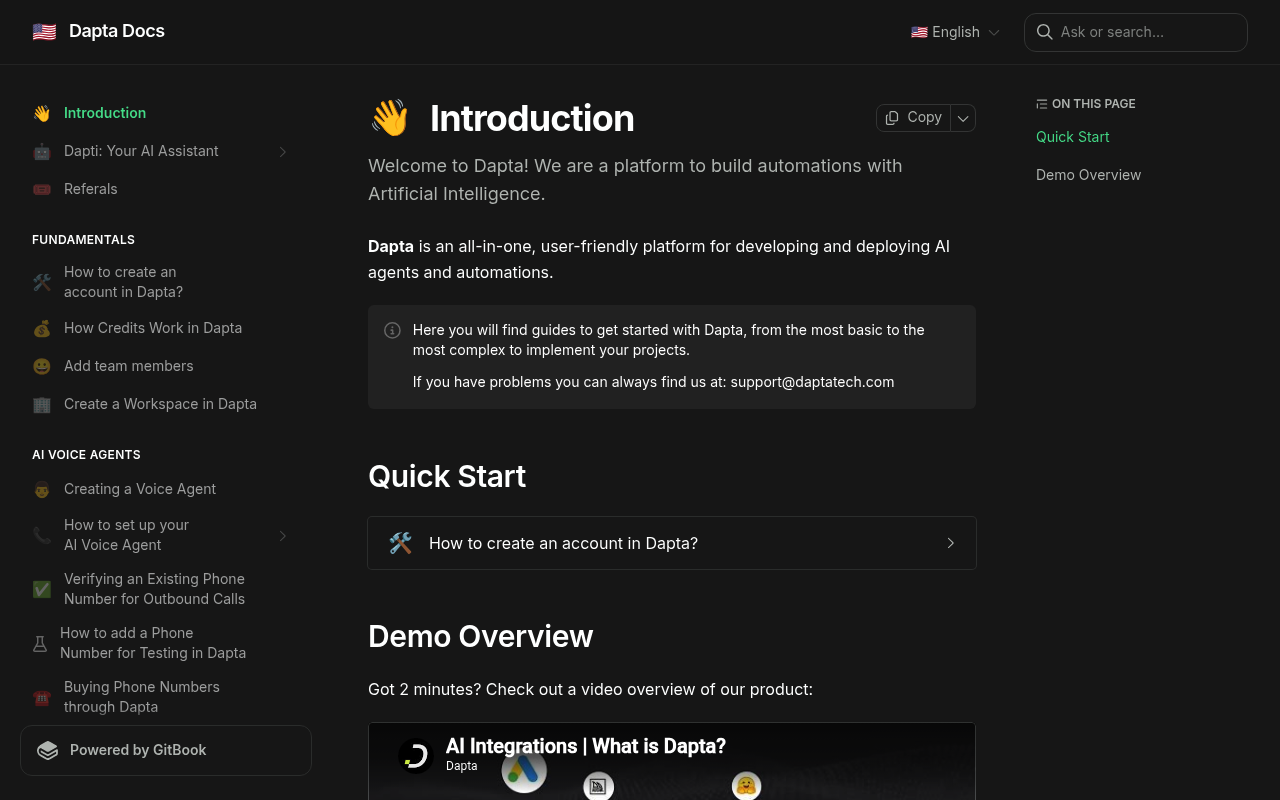
Dapta is a no-code AI voice and text agent platform for small and medium businesses, letting teams build AI phone agents, SMS and WhatsApp bots, meeting notetakers, and workflow automations in minutes without writing code. Voice agents answer inbound and place outbound calls in 20+ languages, qualify leads, book appointments, and handle support 24/7; text agents automate SMS and WhatsApp conversations; Flow Studio wires no-code automations across 1000+ tools with CRM connectors for HubSpot, Salesforce, and GoHighLevel. Dapta exposes a hosted, workspace-scoped Model Context Protocol (MCP) server at mcp.dapta.ai so AI clients such as Claude and Codex can drive a workspace, plus an outbound webhook surface for call, meeting, flow, and campaign events. The company is backed by 500 Global and says it serves 50,000+ businesses.
Dapta is profiled on the APIs.io network. Tagged areas include Company, AI Agents, Voice AI, Conversational AI, and Automation.
The Dapta catalog on APIs.io includes 1 event-driven AsyncAPI specification.
Dapta’s developer surface includes engineering blog, documentation, getting-started guide, pricing, signup flow, support, authentication, and 14 more developer resources.
Kin Score
 Kin Score
How this is scored →
Kin Score
How this is scored →scored 2026-10-23 · rubric v0.25.0
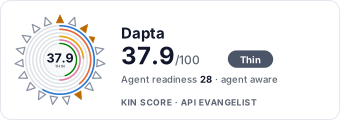 It updates itself when the score changes. Paste this where you link to your API docs:
<a href="https://apis.io/providers/dapta/"><img src="https://apis.io/badge/dapta/card.svg" alt="Dapta on APIs.io — Kin Score by API Evangelist"></a>Other styles, a README pill and a shields.io endpoint are on the badge page.
MCP Servers 1
Model Context Protocol servers that expose these APIs to AI agents.
Event Specifications 1
AsyncAPI definitions for this provider's event-driven and streaming APIs.
Dapta Webhooks
ASYNCAPISecurity Posture 2
Authentication, domain security, vulnerability disclosure, and trust-center signals.
Resources
Get Started 4
Portal, sign-up, and the first successful call
Documentation 1
Reference material describing how the API behaves
Agent Surfaces 2
MCP servers, agent skills, and machine-readable catalogs
Design & Contract 3
Pagination, idempotency, versioning, errors, and events
Access & Security 2
Authentication, authorization, and security posture
Operate 2
Status, limits, changes, and where to get help
Commercial 3
Pricing, plans, and the legal terms of use
Company 4
The organization behind the API
Source (apis.yml)
Work with this as data
Every provider here is available over the APIs.io API and to AI agents over MCP.