Tradogram
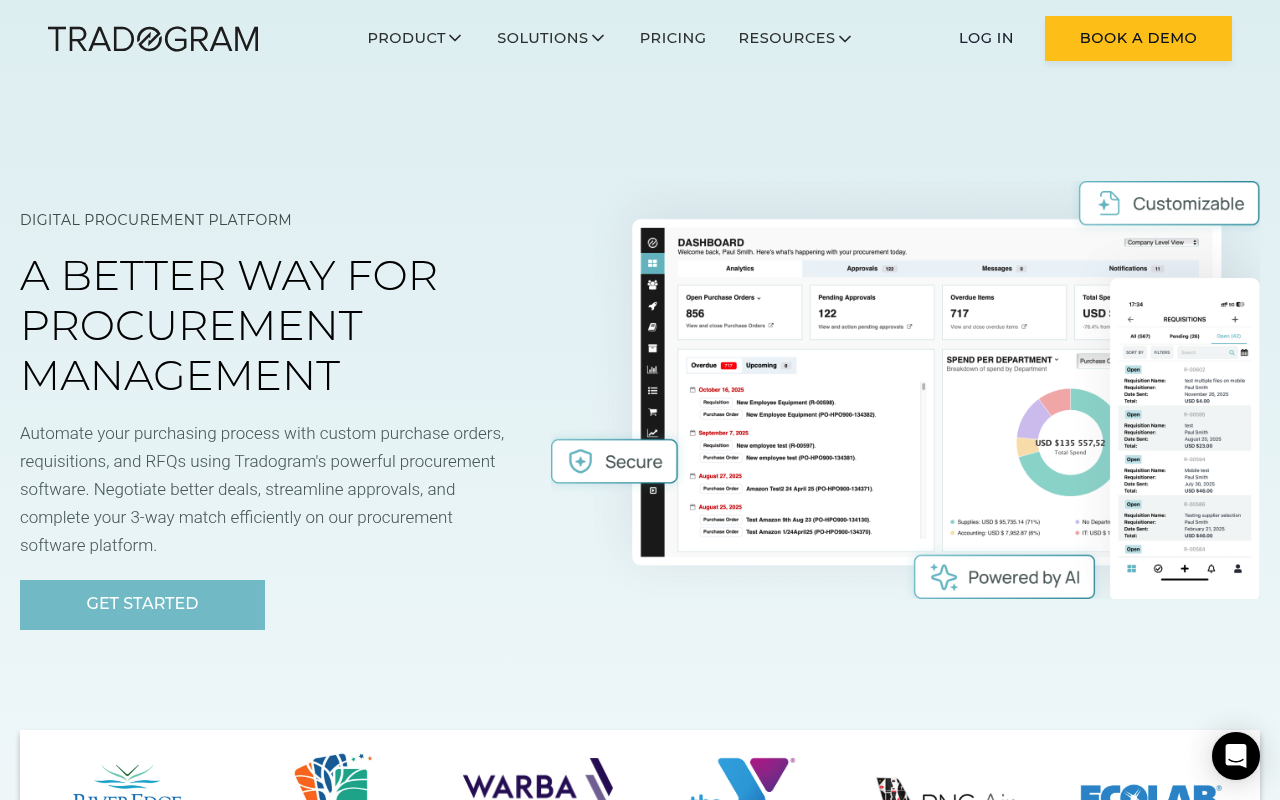
Tradogram is a cloud-based procurement management platform that provides businesses with comprehensive tools to control costs and automate procure-to-pay workflows. The platform enables organizations to manage purchase orders, supplier catalogs, budgets, contracts, and accounts payable through a unified interface. Tradogram exposes a RESTful API at https://api.tradogram.com/v1.0.2 that allows developers to build two-way integrations between Tradogram and external ERP, accounting, or business systems. The API uses API key authentication obtained from the Tradogram dashboard and supports operations across requisitions, purchase orders, sourcing, receiving, invoicing, contracts, and inventory. Tradogram serves small to mid-market teams and enterprises across industries including education, healthcare, and technology seeking structured spend visibility and approval routing without heavyweight ERP complexity.
Tradogram is listed with 1 API on the APIs.io network. Tagged areas include Procurement, Purchase Orders, Supplier Management, Spend Management, and Contracts.
The Tradogram catalog on APIs.io includes 1 JSON-LD context.
Tradogram’s developer surface includes documentation, engineering blog, pricing, and 9 more developer resources.
Kin Score
 Kin Score
How this is scored →
Kin Score
How this is scored →scored 2026-10-17 · rubric v0.24.0
APIs 1
Individual APIs this provider publishes, each with its own machine-readable definition.
Tradogram API
The Tradogram REST API enables two-way data synchronization between Tradogram and external systems. It provides programmatic access to core procurement modules including purchas...
Pricing Plans 1
Published pricing tiers and plan structures.
Rate Limits 1
Documented rate limits and quota policies.
Tradogram Rate Limits
RATE LIMITSFinOps 1
Cost, billing, and metering signals for API financial operations.
Tradogram Finops
FINOPSSemantic Vocabularies 1
JSON-LD contexts and semantic vocabularies used across these APIs.
Tradogram Context
JSON-LDSecurity Posture 1
Authentication, domain security, vulnerability disclosure, and trust-center signals.
Resources
Documentation 1
Reference material describing how the API behaves
Design & Contract 1
Pagination, idempotency, versioning, errors, and events
Access & Security 1
Authentication, authorization, and security posture
Operate 1
Status, limits, changes, and where to get help
Commercial 3
Pricing, plans, and the legal terms of use
Company 4
The organization behind the API
Other 1
Properties that don't map to a standard resource type
Source (apis.yml)
Work with this as data
Every provider here is available over the APIs.io API and to AI agents over MCP.