Pimlico
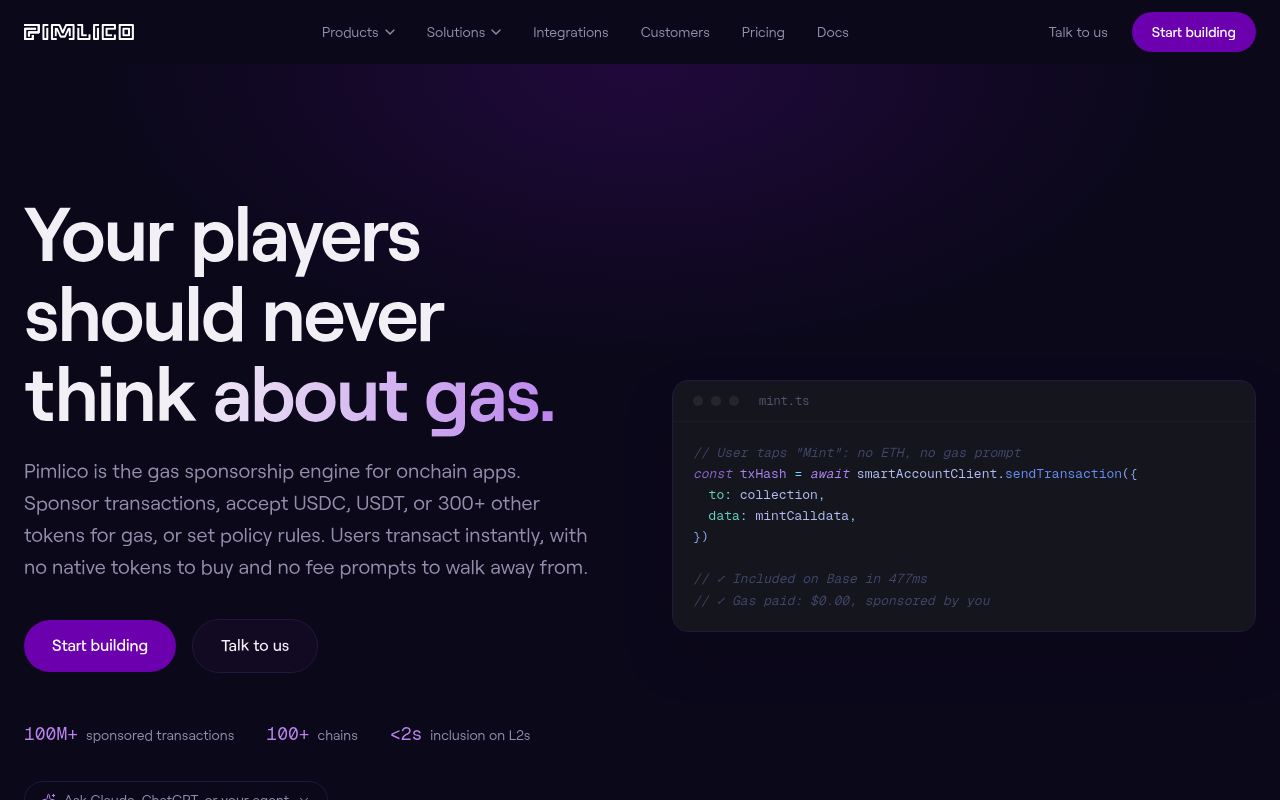
Pimlico is the world's most popular ERC-4337 account abstraction infrastructure platform, providing production bundler and paymaster APIs plus a platform management API for building, deploying, and operating smart accounts on Ethereum and 100+ EVM-compatible chains. Its verifying paymaster sponsors gas for gasless transactions, its ERC-20 paymaster lets users pay gas in stablecoins and other tokens, and its bundler submits, estimates, and tracks ERC-4337 user operations. Developers integrate through the permissionless.js TypeScript SDK (built on viem) against a single JSON-RPC endpoint keyed by chain, and manage sponsorship policies, API keys, and billing through the Pimlico dashboard.
Pimlico is listed with 2 APIs on the APIs.io network. Tagged areas include Company, Account Abstraction, ERC-4337, Blockchain, and Ethereum.
Pimlico’s developer surface includes pricing, documentation, API reference, quickstart, support, signup flow, authentication, and 33 more developer resources.
Kin Score
 Kin Score
How this is scored →
Kin Score
How this is scored →scored 2026-10-17 · rubric v0.24.0
APIs 2
Individual APIs this provider publishes, each with its own machine-readable definition.
Pimlico Bundler & Paymaster API
Unified ERC-4337 JSON-RPC endpoint exposing both the Pimlico bundler (eth_sendUserOperation, eth_estimateUserOperationGas, eth_getUserOperationReceipt, pimlico_getUserOperationG...
Pimlico Platform API
REST management API for the Pimlico platform used to create, list, retrieve, and update sponsorship policies that govern which user operations are eligible for gas sponsorship. ...
Pricing Plans 1
Published pricing tiers and plan structures.
Pimlico Plans
PLANSRate Limits 1
Documented rate limits and quota policies.
Pimlico Rate Limits
RATE LIMITSFinOps 1
Cost, billing, and metering signals for API financial operations.
Pimlico Finops
FINOPSSecurity Posture 4
Authentication, domain security, vulnerability disclosure, and trust-center signals.
Resources
Get Started 4
Portal, sign-up, and the first successful call
Documentation 2
Reference material describing how the API behaves
Agent Surfaces 4
MCP servers, agent skills, and machine-readable catalogs
Design & Contract 5
Pagination, idempotency, versioning, errors, and events
Build 3
SDKs, sample code, and the tooling you integrate with
Access & Security 7
Authentication, authorization, and security posture
Scroll for all 7
Operate 5
Status, limits, changes, and where to get help
Commercial 8
Pricing, plans, and the legal terms of use
Scroll for all 8
Company 1
The organization behind the API
Other 1
Properties that don't map to a standard resource type
Source (apis.yml)
Work with this as data
Every provider here is available over the APIs.io API and to AI agents over MCP.