Lyra
Lyra (now Derive) is an institutional-grade options AMM protocol built on Ethereum, offering REST and WebSocket APIs for querying options boards, strike prices, implied volatility, trading positions, and liquidity pool analytics. The platform provides onchain options and perpetual futures trading with TradFi-level speed via an OP Stack rollup (Chain ID 957).
Lyra is listed with 3 APIs on the APIs.io network, including Public REST API, and 2 more. Tagged areas include Options, AMM, DeFi, Derivatives, and Implied Volatility.
Lyra’s developer surface includes documentation, engineering blog, and 11 more developer resources.
Kin Score
 Kin Score
How this is scored →
Kin Score
How this is scored →scored 2026-10-23 · rubric v0.25.0
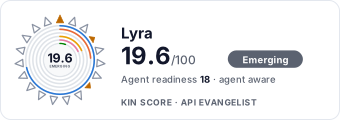 It updates itself when the score changes. Paste this where you link to your API docs:
<a href="https://apis.io/providers/lyra/"><img src="https://apis.io/badge/lyra/card.svg" alt="Lyra on APIs.io — Kin Score by API Evangelist"></a>Other styles, a README pill and a shields.io endpoint are on the badge page.
APIs 3
Individual APIs this provider publishes, each with its own machine-readable definition.
Lyra Public REST API
Public REST API endpoints for querying market data, instruments, tickers, options boards, implied volatility, settlement history, and liquidity pool analytics without authentica...
Lyra Private REST API
Authenticated REST API endpoints for managing subaccounts, submitting and cancelling orders, transferring collateral and positions, accessing order history, handling RFQs, and p...
Lyra WebSocket API
WebSocket API for real-time streaming of market data, order book updates, ticker subscriptions, and private account notifications. Authentication uses wallet-signed timestamps v...
Pricing Plans 1
Published pricing tiers and plan structures.
Plans
PLANSRate Limits 1
Documented rate limits and quota policies.
Rate Limits
RATE LIMITSFinOps 1
Cost, billing, and metering signals for API financial operations.
Finops
FINOPSSecurity Posture 1
Authentication, domain security, vulnerability disclosure, and trust-center signals.
Resources
Documentation 1
Reference material describing how the API behaves
Build 1
SDKs, sample code, and the tooling you integrate with
Access & Security 1
Authentication, authorization, and security posture
Operate 4
Status, limits, changes, and where to get help
Commercial 3
Pricing, plans, and the legal terms of use
Company 2
The organization behind the API
Other 1
Properties that don't map to a standard resource type
Source (apis.yml)
Work with this as data
Every provider here is available over the APIs.io API and to AI agents over MCP.