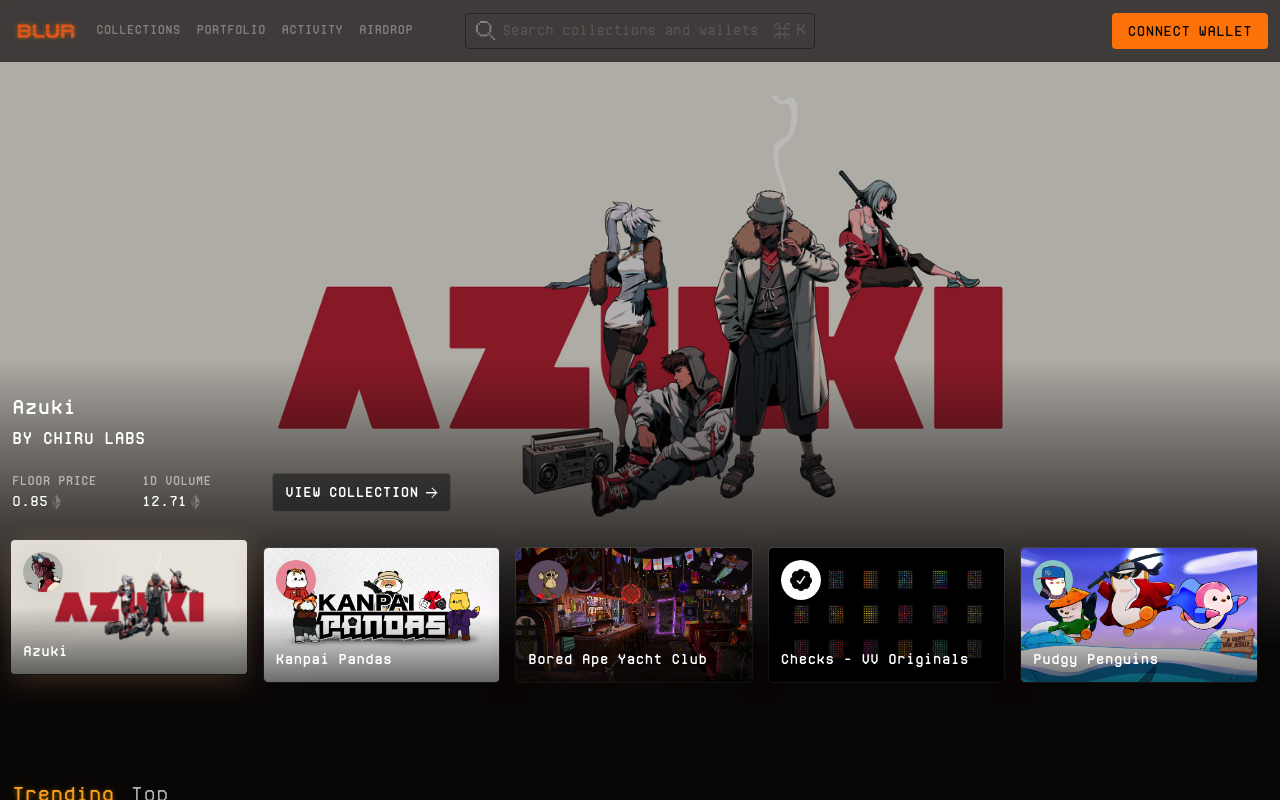
Blur
Blur is a New York-based NFT marketplace and aggregator built for professional traders on Ethereum, founded by the pseudonymous "Pacman" (Tieshun Roquerre) in October 2022 and backed by Paradigm and Standard Crypto. The flagship product, blur.io, offers zero marketplace fees, multi-marketplace sweeping, bulk listing/bidding, real-time mempool reveal sniping, and a portfolio-grade analytics surface that aggregates liquidity from OpenSea, X2Y2, LooksRare, and other Seaport-compatible venues. Blur also operates Blend, a peer-to-peer perpetual NFT lending protocol designed by Paradigm researchers that powers ETH-against-NFT borrowing and Buy-Now-Pay-Later flows without oracles or fixed expiries — Blend has captured the dominant share of NFT lending volume on Ethereum. The BLUR token, distributed via multi-season airdrop campaigns, governs the Blur DAO through the Blur Foundation. The same team launched Blast, an Ethereum L2 with native yield, which now hosts its own NFT activity. Blur does not publish an official public developer API or SDK; on-chain integration happens via the deployed marketplace and Blend smart contracts (Seaport-compatible), and marketplace data is reached through third-party indexers such as Bitquery, SimpleHash, and Alchemy rather than a Blur-operated REST or GraphQL endpoint.
Blur is profiled on the APIs.io network. Tagged areas include NFT, NFT Marketplace, NFT Aggregator, NFT Lending, and Ethereum.
Blur’s developer surface includes engineering blog, documentation, GitHub presence, and 15 more developer resources.
Kin Score
 Kin Score
How this is scored →
Kin Score
How this is scored →scored 2026-10-17 · rubric v0.24.0
Security Posture 2
Authentication, domain security, vulnerability disclosure, and trust-center signals.
Resources
Get Started 1
Portal, sign-up, and the first successful call
Documentation 1
Reference material describing how the API behaves
Build 1
SDKs, sample code, and the tooling you integrate with
Access & Security 3
Authentication, authorization, and security posture
Operate 1
Status, limits, changes, and where to get help
Commercial 1
Pricing, plans, and the legal terms of use
Company 4
The organization behind the API
Other 6
Properties that don't map to a standard resource type
Source (apis.yml)
Work with this as data
Every provider here is available over the APIs.io API and to AI agents over MCP.