TreasurySpring
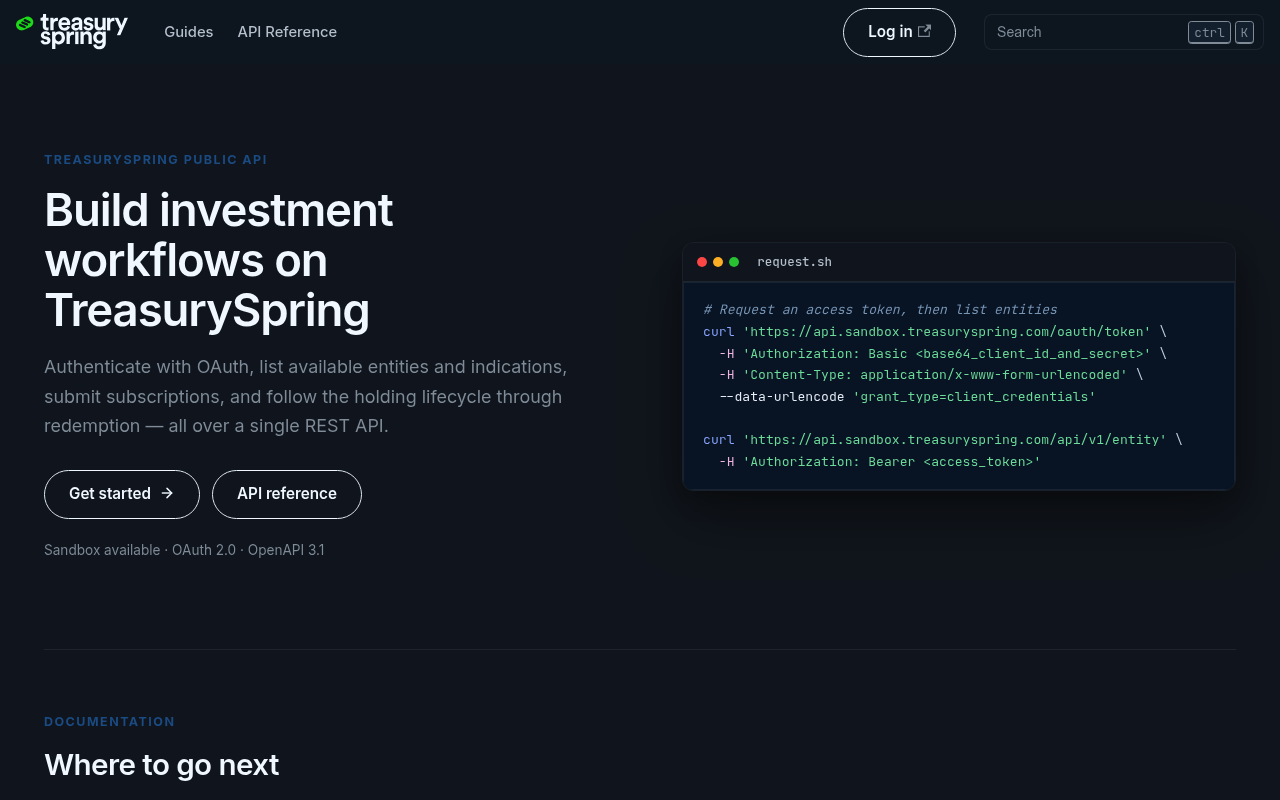
TreasurySpring is a digital platform for institutional cash management that helps organisations holding large excess cash balances minimise risk, maximise return and optimise time by diversifying across secure counterparties via standardised Fixed Term Funds (FTFs). Its Public API (OpenAPI 3.1) gives an authorised user programmatic access to their entities, fund cells, obligor exposures, indications, subscriptions, holdings, tasks and a normalised event stream — the full FTF lifecycle from subscription to live holding — with OAuth 2.0 auth, offset and cursor pagination, webhooks, and a published, read-only Model Context Protocol (MCP) server for AI agents.
TreasurySpring publishes 13 API contracts indexed on the APIs.io network, including Calendar API, Cells API, Entities API, and 10 more. Tagged areas include Company, Fintech, Cash Management, Treasury, and Investment.
The TreasurySpring catalog on APIs.io includes 1 event-driven AsyncAPI specification.
TreasurySpring’s developer surface includes authentication, sandbox, getting-started guide, engineering blog, signup flow, support, and 21 more developer resources.
Kin Score
 Kin Score
How this is scored →
Kin Score
How this is scored →scored 2026-10-17 · rubric v0.24.0
APIs 13
Individual APIs this provider publishes, each with its own machine-readable definition.
TreasurySpring Calendar API
Get Calendar information
TreasurySpring Cells API
Get information about Cells
TreasurySpring Entities API
Get information about Entities
TreasurySpring Event Checkpoints API
Server-managed cursors for stateless event stream consumers. In most cases, checkpoints are not needed. If your system can persist data locally (e.g. in a database, file, or key...
TreasurySpring Events API
Stream of normalised events for integration and reconciliation
TreasurySpring Holdings API
Get information about holdings. For how subscriptions become holdings and how holdings move through their lifecycle, see the FTF Lifecycle section.
TreasurySpring Indications API
Get information about Indications
TreasurySpring Obligor Exposure API
Get information about Obligors
TreasurySpring Subscriptions API
FTF Subscriptions
TreasurySpring Tasks API
Get information about Pending Tasks
TreasurySpring Webhooks API
Integrate with webhooks to receive notifications
TreasurySpring O Auth API
OAuth 2.0 endpoint to exchange your Client Credentials for a token. This token can then be used to access the API.
TreasurySpring Health Check API
Check the status of the API
Scroll for all 13
Open Collections 14
Open, tool-agnostic API collections (OpenAPI-derived and Bruno).
API Collection
OPEN COLLECTIONTreasurySpring Public Calendar API
OPEN COLLECTIONTreasurySpring Public Calendar Cells API
OPEN COLLECTIONTreasurySpring Public Calendar Entities API
OPEN COLLECTIONTreasurySpring Public Calendar Event Checkpoints API
OPEN COLLECTIONTreasurySpring Public Calendar Events API
OPEN COLLECTIONTreasurySpring Public Calendar Healthcheck API
OPEN COLLECTIONTreasurySpring Public Calendar Holdings API
OPEN COLLECTIONTreasurySpring Public Calendar Indications API
OPEN COLLECTIONTreasurySpring Public Calendar OAuth API
OPEN COLLECTIONTreasurySpring Public Calendar Obligor Exposure API
OPEN COLLECTIONTreasurySpring Public Calendar Subscriptions API
OPEN COLLECTIONTreasurySpring Public Calendar Tasks API
OPEN COLLECTIONTreasurySpring Public Calendar Webhooks API
OPEN COLLECTIONScroll for all 14
MCP Servers 1
Model Context Protocol servers that expose these APIs to AI agents.
TreasurySpring MCP Server
TreasurySpring's MCP server lets AI agents (Claude, ChatGPT, Cursor and other MCP-compatible clients) access an authorised user's read-only investment data via the Model Context...
MCP SERVEREvent Specifications 1
AsyncAPI definitions for this provider's event-driven and streaming APIs.
Treasuryspring Events Webhooks
ASYNCAPIOpenAPI Overlays 1
Overlays applied on top of this provider's contracts. Each card says who wrote it: a document the provider publishes, or one API Evangelist derived or generated.
Treasuryspring Openapi Overlay
UNRECORDEDSecurity Posture 2
Authentication, domain security, vulnerability disclosure, and trust-center signals.
Agentic Access 1
Recommended x-agentic-access execution contracts for AI agents.
Resources
Get Started 5
Portal, sign-up, and the first successful call
Documentation 1
Reference material describing how the API behaves
Agent Surfaces 5
MCP servers, agent skills, and machine-readable catalogs
Design & Contract 6
Pagination, idempotency, versioning, errors, and events
Access & Security 2
Authentication, authorization, and security posture
Operate 3
Status, limits, changes, and where to get help
Commercial 2
Pricing, plans, and the legal terms of use
Company 2
The organization behind the API
Other 1
Properties that don't map to a standard resource type
Source (apis.yml)
Work with this as data
Every provider here is available over the APIs.io API and to AI agents over MCP.