Tenyks
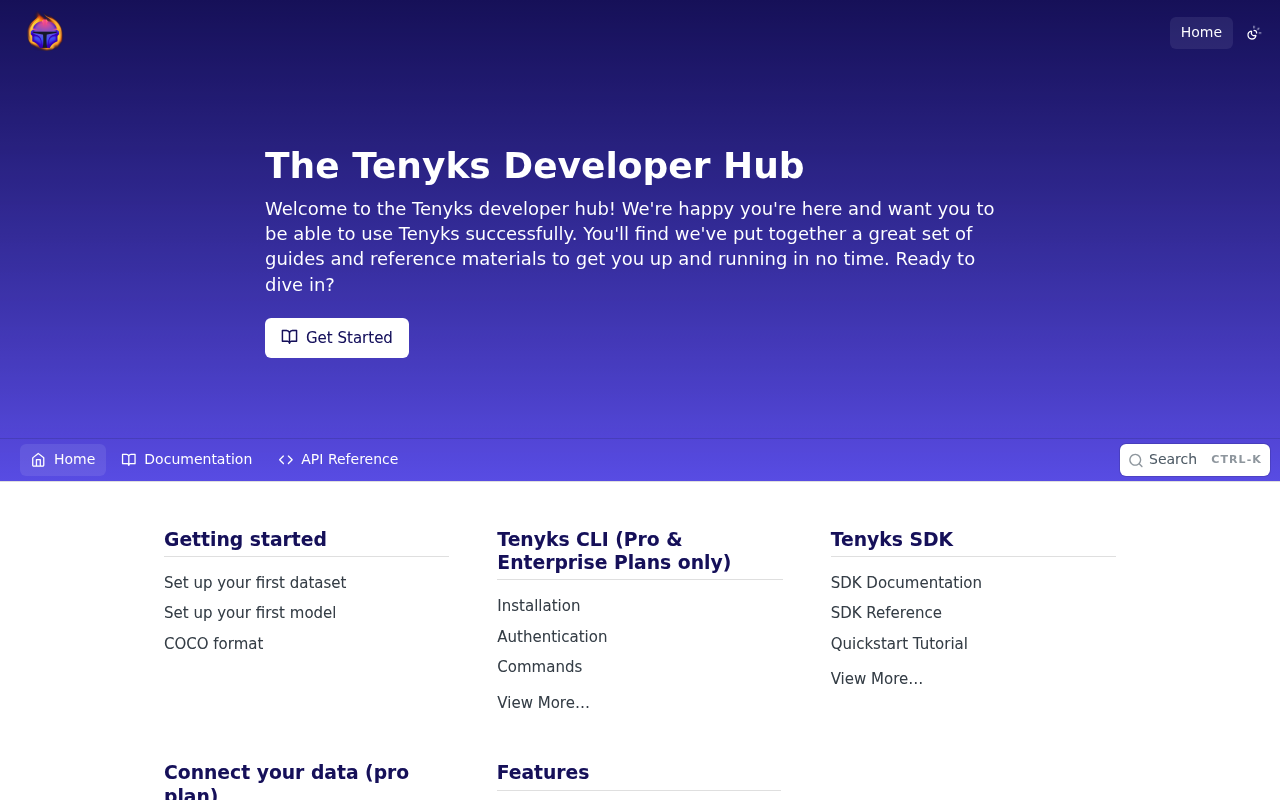
Tenyks is a University of Cambridge spin-out (Y Combinator; backed by Speedinvest) building a visual-intelligence platform for computer vision. Its original product is an MLOps monitoring and validation platform that helps ML engineers working with computer-vision data find and fix what is wrong with their models — data-quality analysis, model performance comparison, text-to-image / image-to-image / object-level similarity search, embeddings, tagging and custom metadata across image and video datasets. Tenyks has since extended into a Vision AI / Video AI Agents platform that turns everyday camera feeds into privacy-first operational analytics for brick-and-mortar businesses. The Tenyks API (currently alpha, for Premium/Dashboard users, with a freemium Sandbox) lets teams authenticate with an API key + secret to obtain a Bearer token, then create datasets and models, and upload and ingest annotations and predictions directly from AWS S3, GCS or Azure. A Python SDK and CLI wrap the same surface.
Tenyks publishes 3 API contracts indexed on the APIs.io network: Auth API, Data Upload API, and Datasets API. Tagged areas include Company, Computer Vision, Machine Learning, MLOps, and Data Quality.
Tenyks’ developer surface includes documentation, API reference, getting-started guide, engineering blog, pricing, signup flow, authentication, and 23 more developer resources.
What this lets a business do 1
Business capabilities this provider's published APIs can perform, derived from its own contracts. Browse all capabilities →
Kin Score
 Kin Score
How this is scored →
Kin Score
How this is scored →scored 2026-10-17 · rubric v0.24.0
APIs 3
Individual APIs this provider publishes, each with its own machine-readable definition.
Tenyks Auth API
Obtain a Bearer access token from an API key and secret.
Tenyks Data Upload API
Upload and ingest annotations, models and predictions from cloud storage.
Tenyks Datasets API
Create and retrieve datasets.
Open Collections 4
Open, tool-agnostic API collections (OpenAPI-derived and Bruno).
API Collection
OPEN COLLECTIONTenyks Auth API
OPEN COLLECTIONTenyks Auth Data Upload API
OPEN COLLECTIONTenyks Auth Datasets API
OPEN COLLECTIONPricing Plans 1
Published pricing tiers and plan structures.
Tenyks Plans Pricing
PLANSOpenAPI Overlays 1
Overlays applied on top of this provider's contracts. Each card says who wrote it: a document the provider publishes, or one API Evangelist derived or generated.
Tenyks Openapi Overlay
UNRECORDEDSecurity Posture 3
Authentication, domain security, vulnerability disclosure, and trust-center signals.
Agentic Access 1
Recommended x-agentic-access execution contracts for AI agents.
Resources
Get Started 4
Portal, sign-up, and the first successful call
Documentation 2
Reference material describing how the API behaves
Agent Surfaces 5
MCP servers, agent skills, and machine-readable catalogs
Design & Contract 5
Pagination, idempotency, versioning, errors, and events
Build 3
SDKs, sample code, and the tooling you integrate with
Access & Security 4
Authentication, authorization, and security posture
Commercial 2
Pricing, plans, and the legal terms of use
Company 3
The organization behind the API
Other 2
Properties that don't map to a standard resource type
Source (apis.yml)
Work with this as data
Every provider here is available over the APIs.io API and to AI agents over MCP.