
Solarize
Solarize is a German energy software company offering a meter-to-cash billing platform as a software-as-a-service for utilities, municipal utilities (Stadtwerke), and energy providers. The platform converts metering data into a revenue stream through automated billing and invoicing, metering data management, monitoring and reporting, and flexible electricity-product configuration. Solarize exposes a REST API at api.solarize.energy covering customers, sites, meters, contracts, measurements, readings, invoices, payments, pricing, and outgoing webhooks, enabling open-architecture integration with ERP, CRM, and metering-operator systems.
Solarize is listed with 1 API on the APIs.io network. Tagged areas include Company, Energy, Billing, Metering, and Utilities.
The Solarize catalog on APIs.io includes 1 event-driven AsyncAPI specification.
Solarize’s developer surface includes documentation, API reference, getting-started guide, support, engineering blog, pricing, authentication, and 16 more developer resources.
Kin Score
 Kin Score
How this is scored →
Kin Score
How this is scored →scored 2026-10-23 · rubric v0.25.0
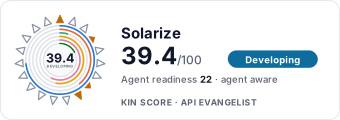 It updates itself when the score changes. Paste this where you link to your API docs:
<a href="https://apis.io/providers/solarize/"><img src="https://apis.io/badge/solarize/card.svg" alt="Solarize on APIs.io — Kin Score by API Evangelist"></a>Other styles, a README pill and a shields.io endpoint are on the badge page.
APIs 1
Individual APIs this provider publishes, each with its own machine-readable definition.
Solarize API
REST API for the Solarize meter-to-cash platform — customers, sites, meters, contracts, measurements, readings, invoices, payments, pricing, and outgoing webhooks. JSON over HTT...
Rate Limits 1
Documented rate limits and quota policies.
Solarize Rate Limits
RATE LIMITSEvent Specifications 1
AsyncAPI definitions for this provider's event-driven and streaming APIs.
Solarize Outgoing Webhooks
Outgoing webhooks deliver entity lifecycle and bill-run events to an external endpoint configured in the Solarize app (Settings > Notifications), where the endpoint URL, optiona...
ASYNCAPISecurity Posture 2
Authentication, domain security, vulnerability disclosure, and trust-center signals.
Resources
Get Started 3
Portal, sign-up, and the first successful call
Documentation 3
Reference material describing how the API behaves
Agent Surfaces 2
MCP servers, agent skills, and machine-readable catalogs
Design & Contract 5
Pagination, idempotency, versioning, errors, and events
Access & Security 2
Authentication, authorization, and security posture
Operate 4
Status, limits, changes, and where to get help
Commercial 1
Pricing, plans, and the legal terms of use
Company 3
The organization behind the API
Source (apis.yml)
Work with this as data
Every provider here is available over the APIs.io API and to AI agents over MCP.