
Immunefi
Immunefi is a crowdsourced web3 security platform that operates the largest onchain bug bounty ecosystem, connecting security researchers with blockchain protocols and rewarding them for responsibly disclosed vulnerabilities. Alongside bug bounties it runs audit competitions and attackathons, PR reviews, Safe Harbor agreements, onchain monitoring, and Magnus, a unified security command center. Immunefi authors and versions the Immunefi Vulnerability Severity Classification System, the severity taxonomy most web3 bounty programs are written against. Its only public machine-readable surface is an unauthenticated JSON endpoint at immunefi.com/public-api/bounties.json that returns the full catalog of live bug bounty programs, including assets in scope, reward tables by severity, impacts, ecosystems and program metadata.
Immunefi is listed with 1 API on the APIs.io network. Tagged areas include Company, Security, Bug Bounty, Vulnerability Disclosure, and Web3.
The Immunefi catalog on APIs.io includes 1 event-driven AsyncAPI specification.
Immunefi’s developer surface includes engineering blog, support, signup flow, and 16 more developer resources.
Kin Score
 Kin Score
How this is scored →
Kin Score
How this is scored →scored 2026-10-23 · rubric v0.25.0
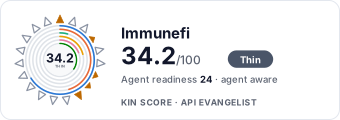 It updates itself when the score changes. Paste this where you link to your API docs:
<a href="https://apis.io/providers/immunefi/"><img src="https://apis.io/badge/immunefi/card.svg" alt="Immunefi on APIs.io — Kin Score by API Evangelist"></a>Other styles, a README pill and a shields.io endpoint are on the badge page.
APIs 1
Individual APIs this provider publishes, each with its own machine-readable definition.
Immunefi Bug Bounty Programs API
An unauthenticated, read-only JSON endpoint published on Immunefi's own domain that returns the complete catalog of bug bounty programs listed on the platform. Each record carri...
Pricing Plans 1
Published pricing tiers and plan structures.
Rate Limits 1
Documented rate limits and quota policies.
Immunefi Rate Limits
RATE LIMITSEvent Specifications 1
AsyncAPI definitions for this provider's event-driven and streaming APIs.
Immunefi Webhooks
ASYNCAPIExamples 1
Example request and response payloads for these APIs.
Security Posture 3
Authentication, domain security, vulnerability disclosure, and trust-center signals.
Resources
Get Started 1
Portal, sign-up, and the first successful call
Agent Surfaces 1
MCP servers, agent skills, and machine-readable catalogs
Design & Contract 4
Pagination, idempotency, versioning, errors, and events
Build 2
SDKs, sample code, and the tooling you integrate with
Access & Security 3
Authentication, authorization, and security posture
Operate 2
Status, limits, changes, and where to get help
Commercial 3
Pricing, plans, and the legal terms of use
Company 3
The organization behind the API
Source (apis.yml)
Work with this as data
Every provider here is available over the APIs.io API and to AI agents over MCP.