GTE
GTE (Global Token Exchange) is a non-custodial, permissionless decentralized exchange built on MegaETH, offering a central limit order book (CLOB) with CEX-level speed — advertised at 100,000 orders per second and ~1ms latency — combined with DeFi security properties. Users trade crypto and tokenized assets 24/7 from a self-custodied wallet, with spot and leveraged/perpetual markets, shortable positions, and on-chain settlement. GTE exposes a public HTTP + WebSocket API (GTE API v1) covering tokens, markets, candles, trades, order books, and per-wallet portfolio/order data, plus a signed POST /exchange endpoint for submitting orders and trades. An official Python SDK (gte-py) constructs the signed transaction bodies. GTE is developed by Liquid Labs and backed by Paradigm.
GTE publishes 6 API contracts indexed on the APIs.io network, including Exchange API, Health API, Info API, and 3 more. Tagged areas include Company, Crypto Defi, Decentralized Exchange, Trading, and Market Data.
GTE’s developer surface includes documentation, authentication, sandbox, engineering blog, support, signup flow, and 20 more developer resources.
Kin Score
 Kin Score
How this is scored →
Kin Score
How this is scored →scored 2026-10-23 · rubric v0.25.0
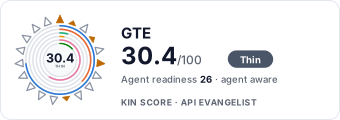 It updates itself when the score changes. Paste this where you link to your API docs:
<a href="https://apis.io/providers/gte/"><img src="https://apis.io/badge/gte/card.svg" alt="GTE on APIs.io — Kin Score by API Evangelist"></a>Other styles, a README pill and a shields.io endpoint are on the badge page.
APIs 6
Individual APIs this provider publishes, each with its own machine-readable definition.
GTE Exchange API
The Exchange API from GTE — 1 operation(s) for exchange.
GTE Health API
The Health API from GTE — 1 operation(s) for health.
GTE Info API
The Info API from GTE — 1 operation(s) for info.
GTE Markets API
The Markets API from GTE — 6 operation(s) for markets.
GTE Tokens API
The Tokens API from GTE — 3 operation(s) for tokens.
GTE Users API
The Users API from GTE — 6 operation(s) for users.
Open Collections 6
Open, tool-agnostic API collections (OpenAPI-derived and Bruno).
GTE Exchange API
OPEN COLLECTIONGTE Exchange Health API
OPEN COLLECTIONGTE Exchange Info API
OPEN COLLECTIONGTE Exchange Markets API
OPEN COLLECTIONGTE Exchange Tokens API
OPEN COLLECTIONGTE Exchange Users API
OPEN COLLECTIONOpenAPI Overlays 1
Overlays applied on top of this provider's contracts. Each card says who wrote it: a document the provider publishes, or one API Evangelist derived or generated.
Gte Openapi Overlay
DERIVEDSecurity Posture 2
Authentication, domain security, vulnerability disclosure, and trust-center signals.
Agentic Access 1
Recommended x-agentic-access execution contracts for AI agents.
Resources
Get Started 3
Portal, sign-up, and the first successful call
Documentation 1
Reference material describing how the API behaves
Agent Surfaces 5
MCP servers, agent skills, and machine-readable catalogs
Design & Contract 5
Pagination, idempotency, versioning, errors, and events
Build 3
SDKs, sample code, and the tooling you integrate with
Access & Security 2
Authentication, authorization, and security posture
Operate 1
Status, limits, changes, and where to get help
Commercial 2
Pricing, plans, and the legal terms of use
Company 2
The organization behind the API
Other 2
Properties that don't map to a standard resource type
Source (apis.yml)
Work with this as data
Every provider here is available over the APIs.io API and to AI agents over MCP.