
DispatchHealth
DispatchHealth is a Denver, Colorado-based provider of complex medical care in the home, founded in 2013 and merged with Medically Home in June 2025 to create one of the largest hospital-at-home platforms in the United States. The combined company delivers same-day urgent care, hospital-alternative (hospital-at-home) care, transitional and recovery care across roughly 50 metropolitan areas in partnership with nearly 40 health systems and national payers. Its CESIA technology platform handles rules-based and AI-assisted care planning, dispatching, routing, scheduling, care-team status, real-time two-way patient communications and field equipment tracking, and is designed to integrate with a partner health system's existing EMR rather than replace it. DispatchHealth partners access the platform through the Dispatch Express portal and patients through an online request flow; the company publishes no public developer portal, API documentation, or machine-readable API contract as of this profiling pass.
DispatchHealth is listed with 1 API on the APIs.io network. Tagged areas include Company, Healthcare, Health Systems, Hospital at Home, and Home Care.
DispatchHealth’s developer surface includes authentication, engineering blog, support, FAQ, pricing, signup flow, and 20 more developer resources.
Kin Score
 Kin Score
How this is scored →
Kin Score
How this is scored →scored 2026-10-23 · rubric v0.25.0
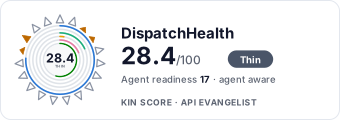 It updates itself when the score changes. Paste this where you link to your API docs:
<a href="https://apis.io/providers/dispatchhealth/"><img src="https://apis.io/badge/dispatchhealth/card.svg" alt="DispatchHealth on APIs.io — Kin Score by API Evangelist"></a>Other styles, a README pill and a shields.io endpoint are on the badge page.
APIs 1
Individual APIs this provider publishes, each with its own machine-readable definition.
DispatchHealth MCP Server
An OAuth 2.1-protected Model Context Protocol (MCP) server exposed on DispatchHealth's own host by the WordPress MCP adapter running on www.dispatchhealth.com. Discovery is full...
MCP Servers 1
Model Context Protocol servers that expose these APIs to AI agents.
Security Posture 3
Authentication, domain security, vulnerability disclosure, and trust-center signals.
Scopes 1
OAuth scopes governing access to this provider's APIs.
Resources
Get Started 2
Portal, sign-up, and the first successful call
Agent Surfaces 3
MCP servers, agent skills, and machine-readable catalogs
Design & Contract 1
Pagination, idempotency, versioning, errors, and events
Build 1
SDKs, sample code, and the tooling you integrate with
Access & Security 5
Authentication, authorization, and security posture
Operate 2
Status, limits, changes, and where to get help
Commercial 3
Pricing, plans, and the legal terms of use
Company 6
The organization behind the API
Other 3
Properties that don't map to a standard resource type
Source (apis.yml)
Work with this as data
Every provider here is available over the APIs.io API and to AI agents over MCP.