Animoto
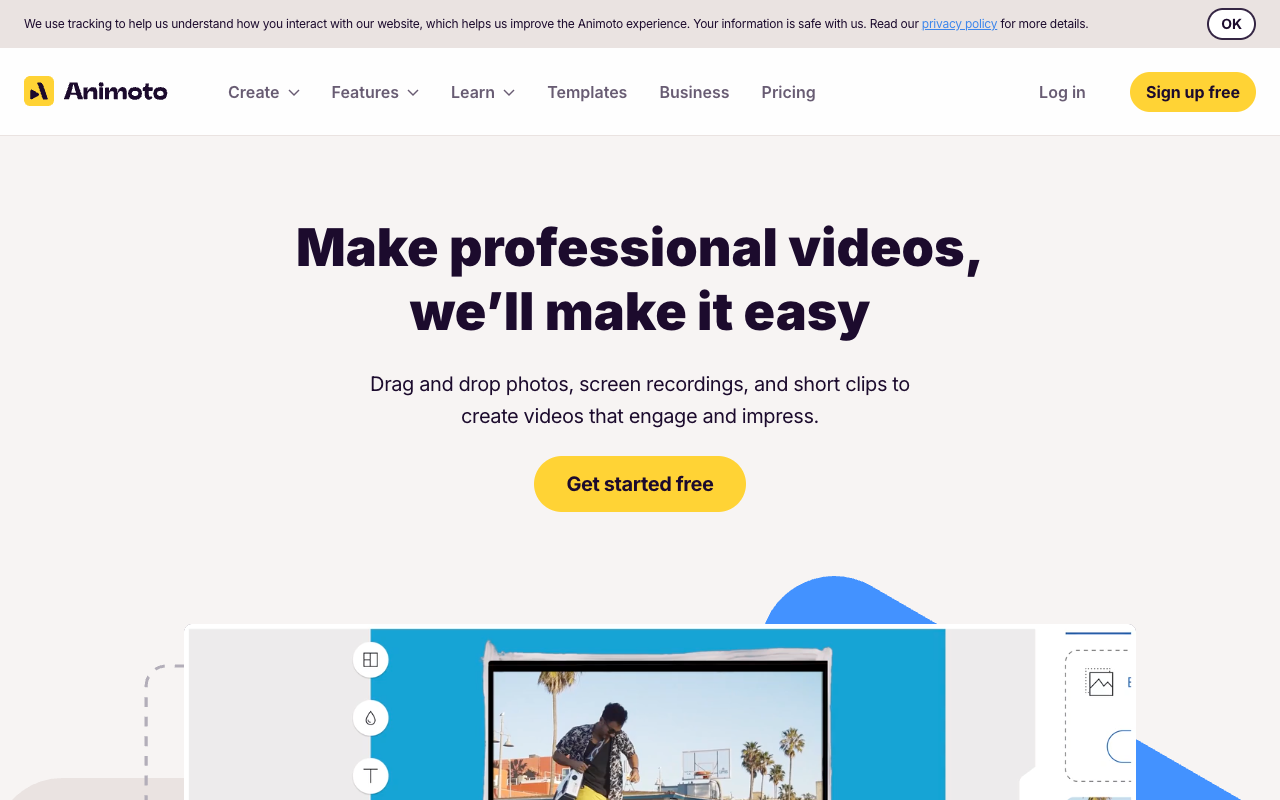
Animoto is a cloud-based video creation platform, founded in 2006 and headquartered in New York City, that lets anyone turn photos, video clips, screen recordings and music into professional-looking videos through a drag-and-drop web editor and a large library of customizable templates. It is widely used for marketing and social-media videos, e-commerce and product promos, slideshows, real-estate tours, training and internal communications, and personal celebration videos, and is sold as subscription SaaS across free, Basic, Professional and Professional Plus tiers. Animoto is part of the Redbrick family of brands. It was surfaced as a portfolio company of kindred-ventures. Animoto formerly ran a partner-facing REST API for programmatic video directing and rendering: the API host api.animoto.com is still live and answers every request with an HTTP Basic challenge, but the developer program around it has been retired — animoto.com/developer now serves the marketing homepage, developer.animoto.com and the documented partner sandbox hosts no longer resolve, the help center Developer Resources section is empty, and the official Animoto API Ruby client has not been released since 2013.
Animoto is listed with 1 API on the APIs.io network. Tagged areas include Company, Consumer, Video, Video Creation, and Video Editing.
Animoto’s developer surface includes engineering blog, pricing, support, signup flow, authentication, changelog, and 14 more developer resources.
Kin Score
 Kin Score
How this is scored →
Kin Score
How this is scored →scored 2026-10-17 · rubric v0.24.0
APIs 1
Individual APIs this provider publishes, each with its own machine-readable definition.
Animoto API
The Animoto API is a partner-facing RESTful web service for programmatically directing and rendering videos from images, video clips, music and text. The host is live and authen...
Pricing Plans 1
Published pricing tiers and plan structures.
Rate Limits 1
Documented rate limits and quota policies.
Animoto Rate Limits
RATE LIMITSSecurity Posture 2
Authentication, domain security, vulnerability disclosure, and trust-center signals.
Resources
Get Started 2
Portal, sign-up, and the first successful call
Agent Surfaces 1
MCP servers, agent skills, and machine-readable catalogs
Design & Contract 2
Pagination, idempotency, versioning, errors, and events
Build 3
SDKs, sample code, and the tooling you integrate with
Access & Security 3
Authentication, authorization, and security posture
Operate 3
Status, limits, changes, and where to get help
Commercial 4
Pricing, plans, and the legal terms of use
Company 2
The organization behind the API
Source (apis.yml)
Work with this as data
Every provider here is available over the APIs.io API and to AI agents over MCP.