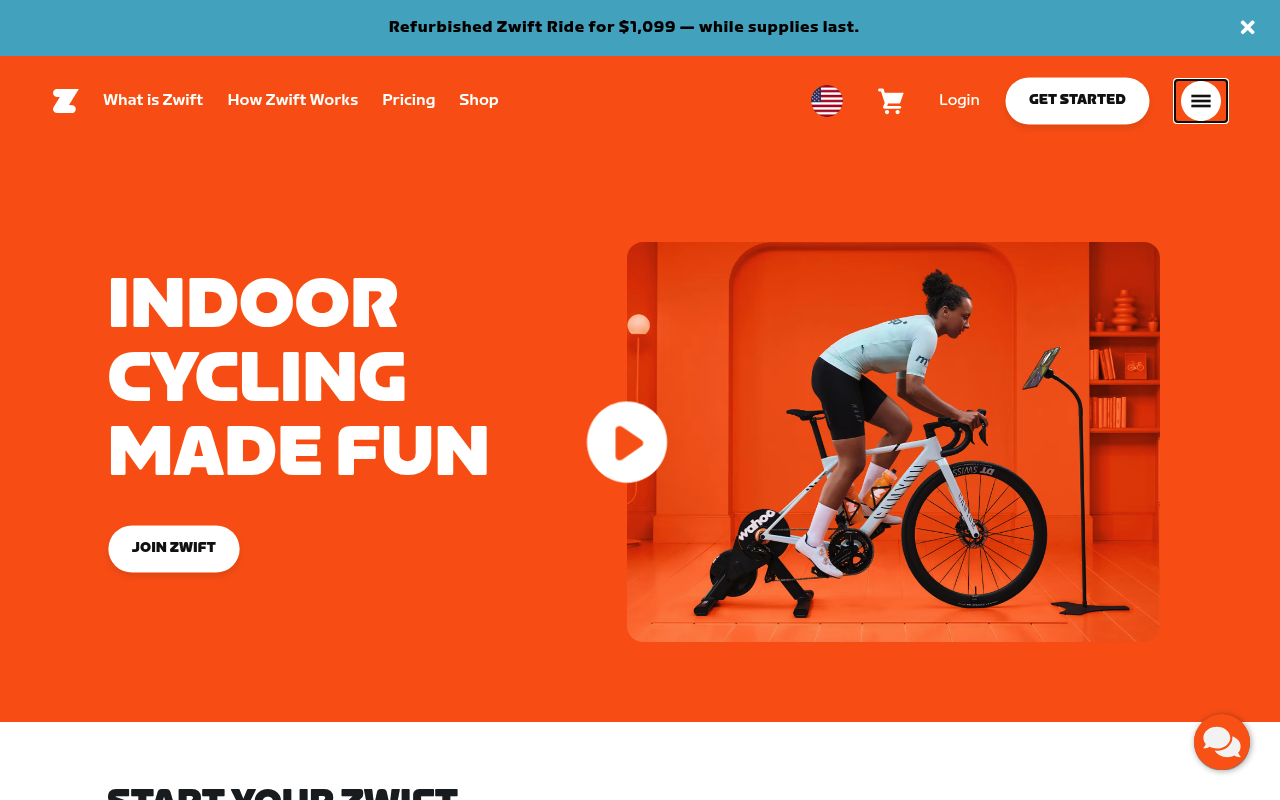
Zwift
Zwift is a Long Beach, California online fitness company that operates a multiplayer indoor cycling and running platform combining stationary smart trainers and bikes with a 3D virtual-world game client. Riders and runners use a smart trainer, smart bike (such as the in-house Zwift Ride), treadmill, or pod to drive an avatar through fictional worlds (Watopia, Makuri Islands) and licensed real-world routes, joining structured workouts, group rides, races, training plans, and 24/7 events alongside a global community of more than a million members. The platform pairs with smart trainers and heart-rate monitors over Bluetooth and ANT+, and the Zwift Companion mobile app provides in-game messaging, ride control, and route discovery. Zwift does not operate a general public developer portal, OpenAPI reference, or open-source SDK. Its developer surface is limited to a private, application-only Structured Training API for approved training partners (TrainingPeaks, TrainerRoad, Wahoo SYSTM, JOIN Cycling and similar coaching platforms) that lets external workout builders push custom workouts into a rider's Zwift account, plus one-way activity-export connections to Strava, TrainingPeaks, Garmin Connect, MapMyRide, MapMyRun, Adidas Running, Technogym, Fitbit, Wahoo, Apple Health, and Withings. There is no public REST surface, OAuth client registration, or partner self-service available to general developers — third-party tools (community libraries, ZwiftPower, Sauce for Zwift) interact with Zwift via reverse-engineered private endpoints, not a sanctioned API. Zwift is a paid consumer subscription business; revenue comes from monthly memberships and hardware sales (Zwift Ride, Zwift Cog, Zwift Click, Zwift Play).
Zwift is profiled on the APIs.io network. Tagged areas include Cycling, Running, Indoor Cycling, Smart Trainers, and Fitness.
Zwift’s developer surface includes pricing, support, status page, GitHub presence, YouTube channel, and 31 more developer resources.
Kin Score
 Kin Score
How this is scored →
Kin Score
How this is scored →scored 2026-10-17 · rubric v0.24.0
Markets this provider is in provisional
The Kin Score Market layer reads a provider inside its market: its position, and how deep its integrations go. Depth is only comparable within a position. Provisional and unweighted: not part of the Kin Score or agent readiness.
| Market | Position | Depth | Registered MCP server | Declares compatibility |
|---|---|---|---|---|
| Health and Wellness (consumer health, fitness, wearables) | covered | 17.2 (thin) | - | - |
Registered MCP server and declares compatibility are report only — not weighted. Undeclared means we found nothing we can read, so there is no number: we never infer integrations.
Security Posture 1
Authentication, domain security, vulnerability disclosure, and trust-center signals.
Resources
Build 2
SDKs, sample code, and the tooling you integrate with
Access & Security 1
Authentication, authorization, and security posture
Learn 4
Tutorials, courses, talks, and written guidance
Operate 4
Status, limits, changes, and where to get help
Commercial 3
Pricing, plans, and the legal terms of use
Company 8
The organization behind the API
Scroll for all 8
Other 14
Properties that don't map to a standard resource type
Scroll for all 14
Source (apis.yml)
Work with this as data
Every provider here is available over the APIs.io API and to AI agents over MCP.