Trato
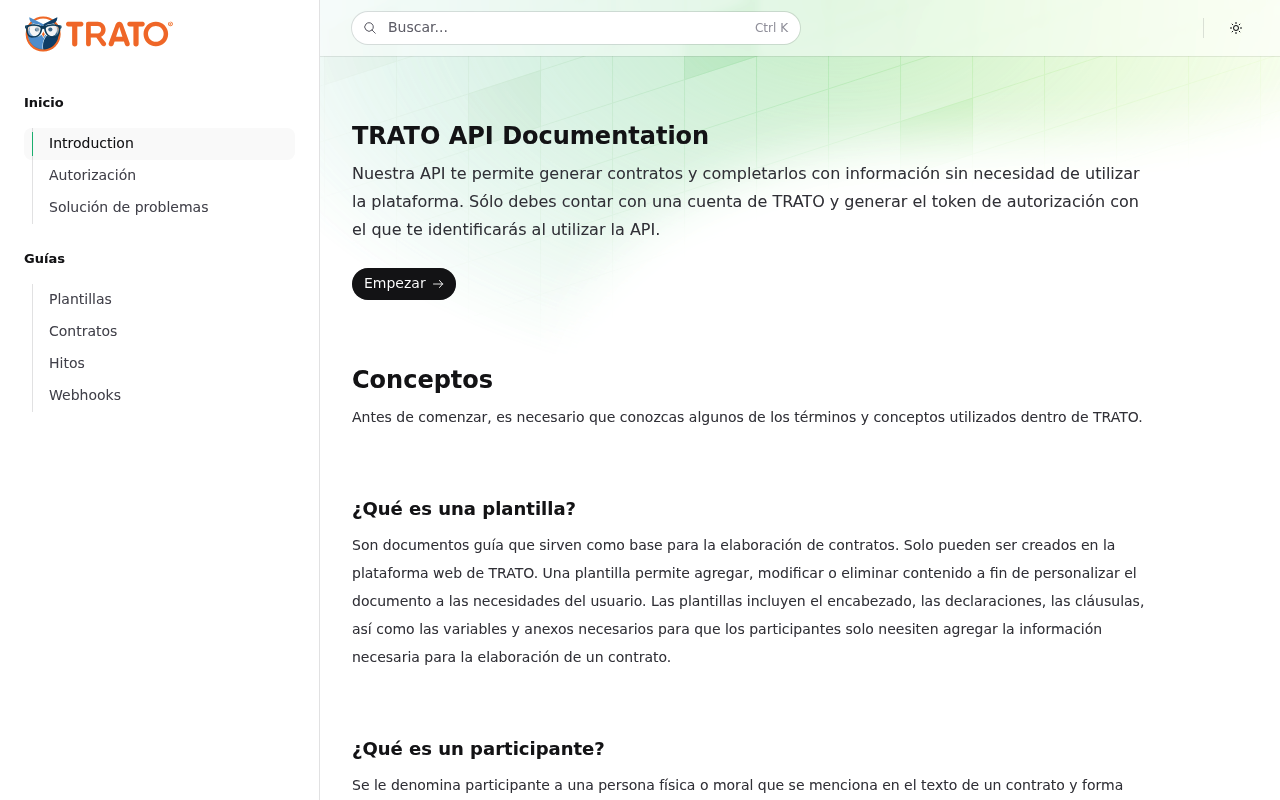
TRATO is an AI-powered Contract Lifecycle Management (CLM) and electronic signature platform used by more than 180,000 users to centralize, draft, approve, sign and track contracts. It offers template-based smart drafting, automated approval routing, real-time contract tracking, and secure e-signatures, with multi-jurisdiction legal expertise across Mexico, Spain and Germany and support for Mexican NOM-151 advanced electronic signatures. TRATO exposes a JWT-authenticated REST API (Contracts, Templates, Milestones) and webhook events for programmatic contract generation and integration with CRM, document management and payment systems. Founded in 2014 in Mexico City and backed by 500 Global.
Trato is listed with 5 APIs on the APIs.io network, including Contracts API, Custom Properties API, Participants API, and 2 more. Tagged areas include Company, Contract Management, Contract Lifecycle Management, Electronic Signature, and Legal Tech.
The Trato catalog on APIs.io includes 1 event-driven AsyncAPI specification.
Trato’s developer surface includes documentation, API reference, getting-started guide, engineering blog, support, pricing, authentication, and 22 more developer resources.
Kin Score
 Kin Score
How this is scored →
Kin Score
How this is scored →scored 2026-10-09 · rubric v0.23.0
APIs 5
Individual APIs this provider publishes, each with its own machine-readable definition.
Trato Contracts API
Create, configure, send, sign and manage contracts.
Trato Custom Properties API
Attach custom metadata properties to a contract.
Trato Participants API
Manage participants (signers) on a contract.
Trato Spectators API
Manage read-only observers of a contract.
Trato Templates API
List reusable contract templates.
Open Collections 6
Open, tool-agnostic API collections (OpenAPI-derived and Bruno).
API Collection
OPEN COLLECTIONTRATO Contract Contracts API
OPEN COLLECTIONTRATO Contract Contracts Custom Properties API
OPEN COLLECTIONTRATO Contract Contracts Participants API
OPEN COLLECTIONTRATO Contract Contracts Spectators API
OPEN COLLECTIONTRATO Contract Contracts Templates API
OPEN COLLECTIONEvent Specifications 1
AsyncAPI definitions for this provider's event-driven and streaming APIs.
TRATO Webhooks
TRATO delivers contract and milestone lifecycle events to subscriber URLs as HTTP POST callbacks. Webhooks are configured in the user profile per event type. Each request carrie...
ASYNCAPIOpenAPI Overlays 1
Overlays applied on top of this provider's contracts. Each card says who wrote it: a document the provider publishes, or one API Evangelist derived or generated.
Trato Openapi Overlay
GENERATEDSecurity Posture 2
Authentication, domain security, vulnerability disclosure, and trust-center signals.
Resources
Get Started 4
Portal, sign-up, and the first successful call
Documentation 3
Reference material describing how the API behaves
Agent Surfaces 4
MCP servers, agent skills, and machine-readable catalogs
Design & Contract 6
Pagination, idempotency, versioning, errors, and events
Build 1
SDKs, sample code, and the tooling you integrate with
Access & Security 2
Authentication, authorization, and security posture
Operate 2
Status, limits, changes, and where to get help
Commercial 3
Pricing, plans, and the legal terms of use
Company 3
The organization behind the API
Other 1
Properties that don't map to a standard resource type
Source (apis.yml)
Work with this as data
Every provider here is available over the APIs.io API and to AI agents over MCP.