iRobot
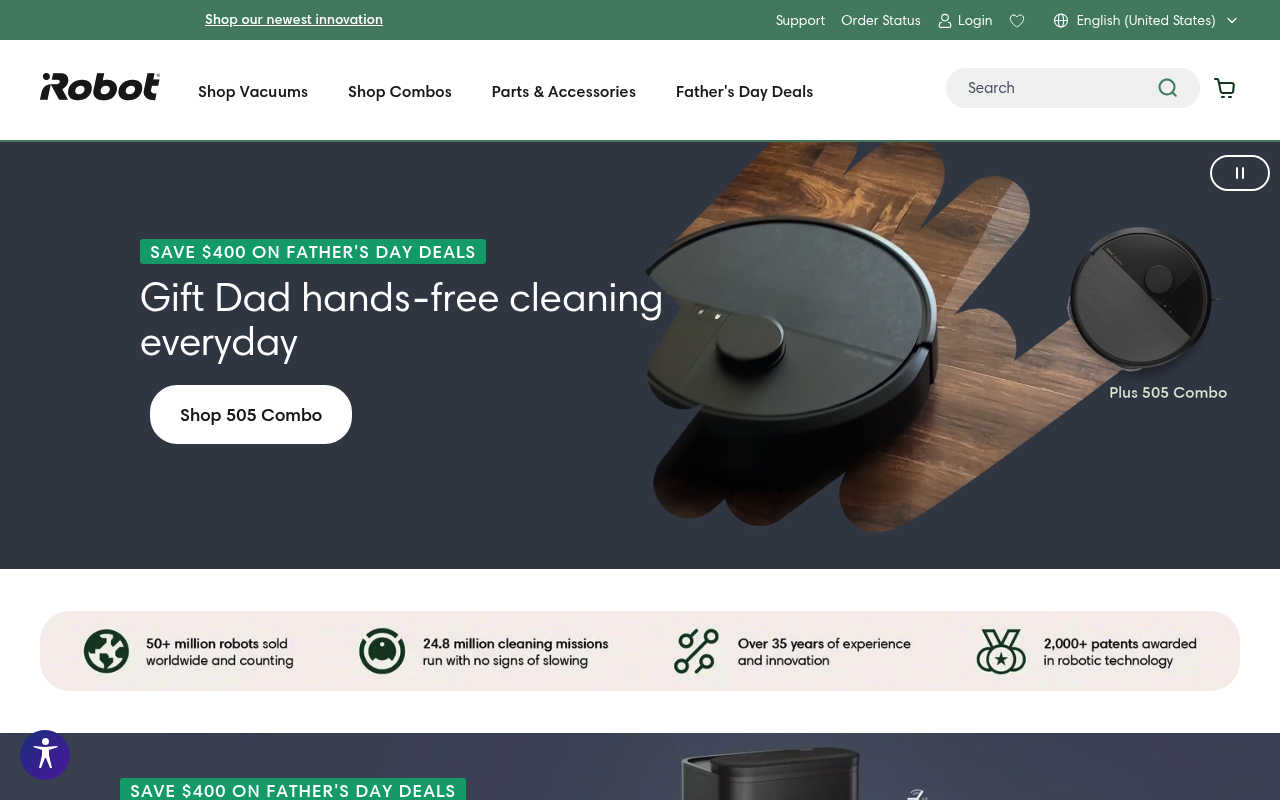
iRobot Corporation is a Bedford, Massachusetts consumer robotics company best known for the Roomba robot vacuum and the Braava and Braava jet robot mop product lines. Founded in 1990 by MIT roboticists, iRobot pioneered the home cleaning robot category and has sold tens of millions of units worldwide. Its current portfolio includes the Roomba Max, Roomba Plus, and Roomba 100/200 series vacuums and combo (vacuum + mop) models, along with AutoWash and AutoEmpty docks, the iRobot Home App for scheduling and mapping, and a cleaning accessories and trade-in program. The proposed acquisition by Amazon was abandoned in January 2024 after regulatory pushback from the European Commission, after which iRobot underwent a major restructuring and layoffs. iRobot's revenue model is direct robot and accessory sales plus recurring consumables; it does not publish a public developer API, SDK, or OpenAPI specification, and its homesupport documentation explicitly notes that Wi-Fi connected Roombas do not have an open API. A community of unofficial reverse-engineered libraries (dorita980, rest980, pyirobot) exists but is not endorsed by iRobot.
iRobot is profiled on the APIs.io network. Tagged areas include Robotics, Consumer Robotics, Home Robotics, Robot Vacuums, and Robot Mops.
iRobot’s developer surface includes support, engineering blog, GitHub presence, YouTube channel, and 10 more developer resources.
Kin Score
 Kin Score
How this is scored →
scored 2026-10-17 · rubric v0.24.0
Markets this provider is in provisional
The Kin Score Market layer reads a provider inside its market: its position, and how deep its integrations go. Depth is only comparable within a position. Provisional and unweighted: not part of the Kin Score or agent readiness.
| Market | Position | Depth | Registered MCP server | Declares compatibility |
|---|---|---|---|---|
| IoT and Smart Home | standard | 36.2 (thin) | - | - |
Registered MCP server and declares compatibility are report only — not weighted. Undeclared means we found nothing we can read, so there is no number: we never infer integrations.
Security Posture 1
Authentication, domain security, vulnerability disclosure, and trust-center signals.
Resources
Documentation 1
Reference material describing how the API behaves
Build 1
SDKs, sample code, and the tooling you integrate with
Access & Security 1
Authentication, authorization, and security posture
Learn 1
Tutorials, courses, talks, and written guidance
Operate 1
Status, limits, changes, and where to get help
Company 8
The organization behind the API
Scroll for all 8
Other 1
Properties that don't map to a standard resource type
Source (apis.yml)
Work with this as data
Every provider here is available over the APIs.io API and to AI agents over MCP.