Heska
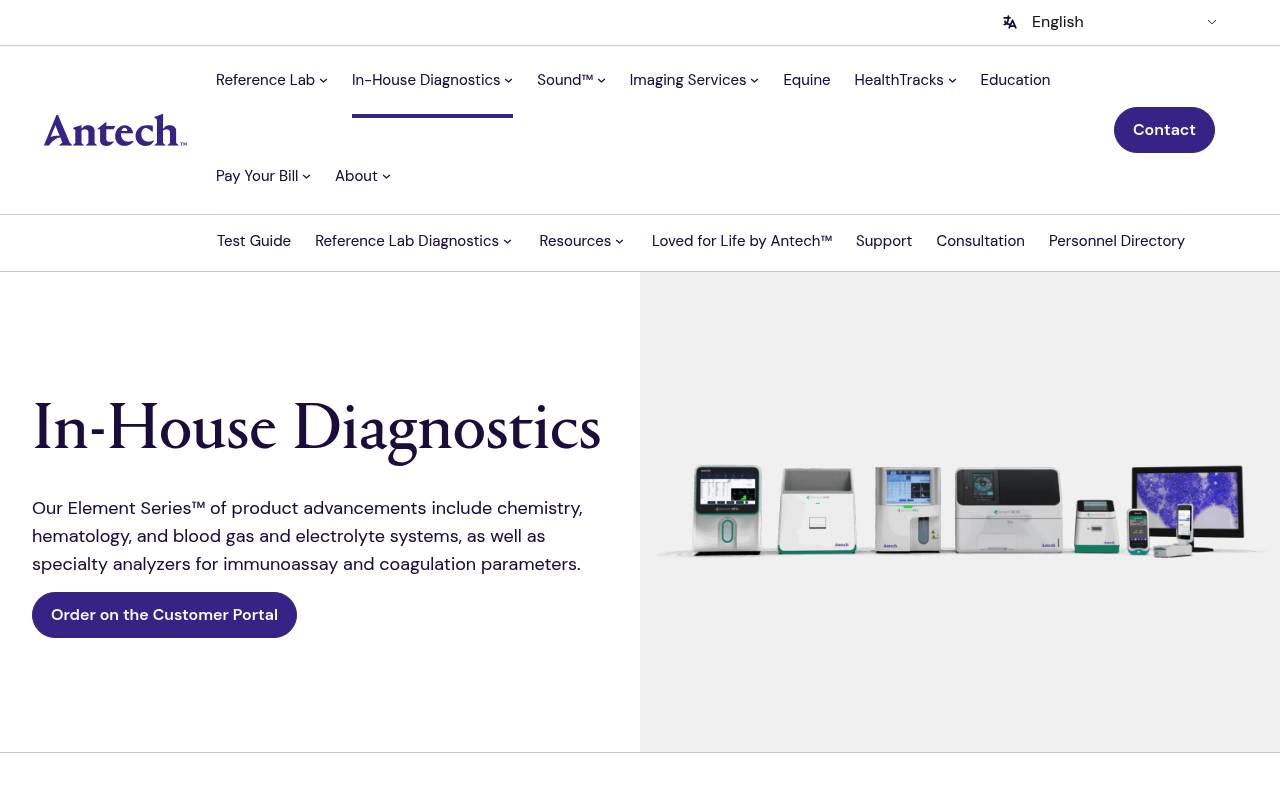
Heska is a veterinary diagnostics company that makes in-clinic point-of-care lab analyzers and imaging for veterinary practices - chemistry (Element DC/DCX/RC/RCX), hematology (Element HT5), blood gas and electrolytes (Element POC), immunodiagnostics (Element i), coagulation (Element COAG), and AI-guided urine/fecal/blood-morphology testing (Element AIM) - plus the HeskaView Connect lab data and workflow software. Heska was acquired by Antech Diagnostics, a subsidiary of Mars, Incorporated (Mars Petcare / Mars Science & Diagnostics), in 2023, and now operates as an Antech company. Heska exposes a partner-gated integration API that bidirectionally connects its analyzers to veterinary practice information management systems (PIMS/EMR) - orders flow out to the analyzers and results flow back into the patient record - but there is no public, self-service developer portal, published API reference, OpenAPI, or public pricing. Access is provisioned to approved integration partners (ezyVet, Instinct, Vetspire, NectarVet, Digitail, and others) via API Partner credentials.
Heska is listed with 3 APIs on the APIs.io network. Tagged areas include Veterinary, Diagnostics, Animal Health, Point of Care, and Lab Analyzers.
Heska’s developer surface includes documentation and 5 more developer resources.
Kin Score
 Kin Score
How this is scored →
Kin Score
How this is scored →scored 2026-10-17 · rubric v0.24.0
 It updates itself when the score changes. Paste this where you link to your API docs:
<a href="https://apis.io/providers/heska/"><img src="https://apis.io/badge/heska/card.svg" alt="Heska on APIs.io — Kin Score by API Evangelist"></a>Other styles, a README pill and a shields.io endpoint are on the badge page.
Markets this provider is in provisional
The Kin Score Market layer reads a provider inside its market: its position, and how deep its integrations go. Depth is only comparable within a position. Provisional and unweighted: not part of the Kin Score or agent readiness.
| Market | Position | Depth | Registered MCP server | Declares compatibility |
|---|---|---|---|---|
| Veterinary & Pet Care | builds-on | 17.2 (thin) | - | - |
Registered MCP server and declares compatibility are report only — not weighted. Undeclared means we found nothing we can read, so there is no number: we never infer integrations.
APIs 3
Individual APIs this provider publishes. MODELED: a real API behind a partner or contract gate; there is no public reference, so API Evangelist drew its shape. NOT AN API: a product area with no API behind it, not counted.
Heska Lab Orders API
Partner-gated integration surface for placing point-of-care laboratory orders from a practice information management system to Heska in-clinic analyzers. A completed order in th...
MODELED, NO PUBLIC REFERENCEHeska Analyzer Results API
Partner-gated integration surface for returning completed analyzer results back into the ordering PIMS patient record. HeskaView Connect provides consolidated reports, unlimited...
MODELED, NO PUBLIC REFERENCEHeska Patients API
Partner-gated integration surface for associating a lab order and its results with a patient/owner record so diagnostic charts are created and updated automatically in the integ...
MODELED, NO PUBLIC REFERENCESecurity Posture 1
Authentication, domain security, vulnerability disclosure, and trust-center signals.
Resources
Documentation 1
Reference material describing how the API behaves
Access & Security 1
Authentication, authorization, and security posture
Company 2
The organization behind the API
Other 2
Properties that don't map to a standard resource type
Source (apis.yml)
Work with this as data
Every provider here is available over the APIs.io API and to AI agents over MCP.