Arc (The Browser Company)
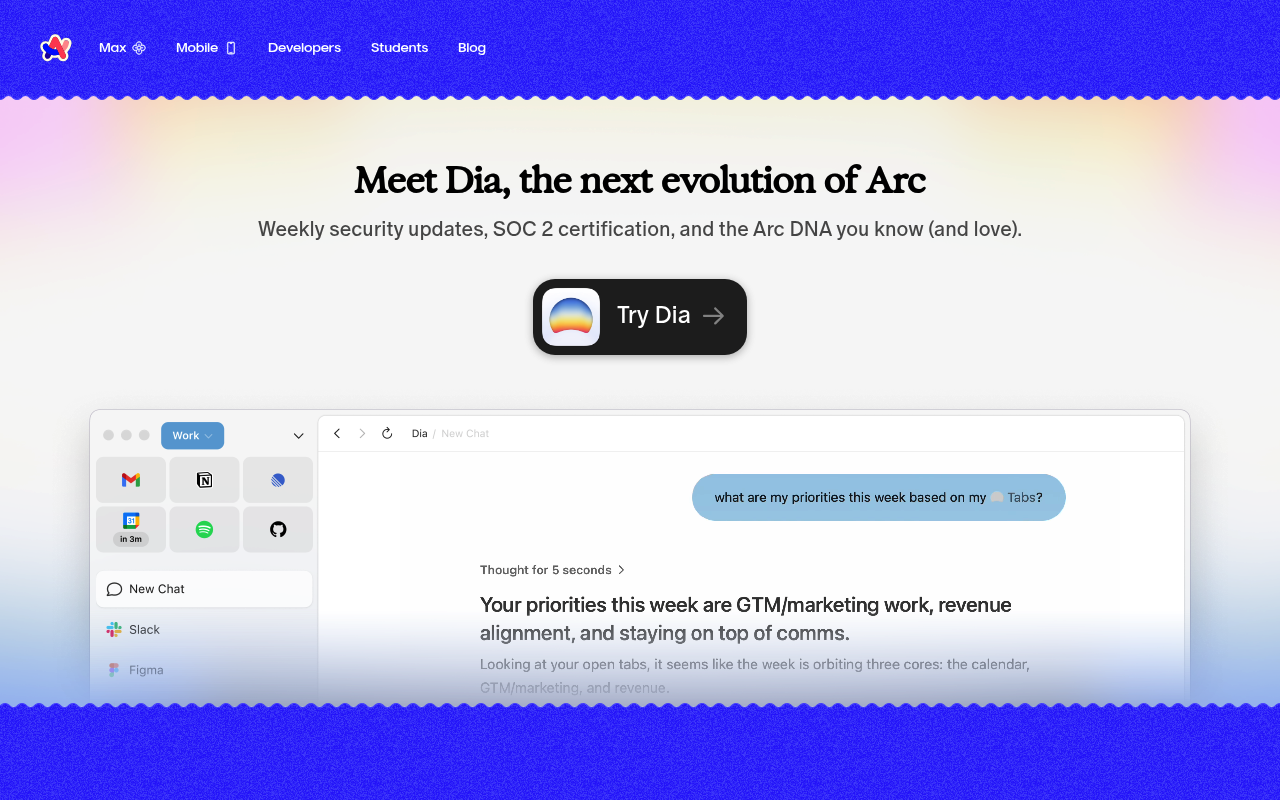
Arc is a Chromium-based alternative web browser from The Browser Company, organized around Spaces, Profiles, Split View, Boosts (user-authored CSS/JS overlays), Easels, Notes, and Arc Search on mobile. Arc is primarily a consumer product without a broad public developer REST API. Developer surface area is limited to Developer Mode in the desktop browser, the underlying Chromium extension model, and user-created Boosts. The company has signalled that Arc's active product investment is winding down in favor of the successor product, Dia.
Arc (The Browser Company) is listed with 4 APIs on the APIs.io network. Tagged areas include Browser, Consumer, Chromium, Boosts, and The Browser Company.
Arc (The Browser Company)’s developer surface includes engineering blog and 11 more developer resources.
Kin Score
 Kin Score
How this is scored →
Kin Score
How this is scored →scored 2026-10-17 · rubric v0.24.0
APIs 5
Individual APIs this provider publishes. MODELED: a real API behind a partner or contract gate; there is no public reference, so API Evangelist drew its shape. NOT AN API: a product area with no API behind it, not counted.
Arc Browser (Desktop)
Desktop browser for macOS and Windows, organized around Spaces, Profiles, Tabs, Split View, and Themes. Built on Chromium.
Arc Search
Mobile-first AI-augmented search and browsing experience that builds "Browse for Me" summary pages from a query. iOS and Android.
Arc Boosts
User-authored CSS and JavaScript overlays that customize the look and behavior of any website inside Arc. Authored from inside the browser rather than via a public REST API; can...
Arc Chromium Extensions
Arc inherits the Chromium / Chrome Web Store extension model, so any Manifest V3 extension can be installed. There is no Arc-specific extension API beyond Chromium.
Arc Developer Mode
In-browser Developer Mode for engineers - exposes developer tools, extension management, and Portrait Mode for sharing in-progress work. Not a public API.
NOT AN APIPricing Plans 1
Published pricing tiers and plan structures.
Rate Limits 1
Documented rate limits and quota policies.
Arc Browser Rate Limits
RATE LIMITSFinOps 1
Cost, billing, and metering signals for API financial operations.
Arc Browser Finops
FINOPSSecurity Posture 3
Authentication, domain security, vulnerability disclosure, and trust-center signals.
Resources
Access & Security 3
Authentication, authorization, and security posture
Operate 1
Status, limits, changes, and where to get help
Commercial 2
Pricing, plans, and the legal terms of use
Company 4
The organization behind the API
Other 2
Properties that don't map to a standard resource type
Source (apis.yml)
Work with this as data
Every provider here is available over the APIs.io API and to AI agents over MCP.