Home Providers Fitbit
Fitbit
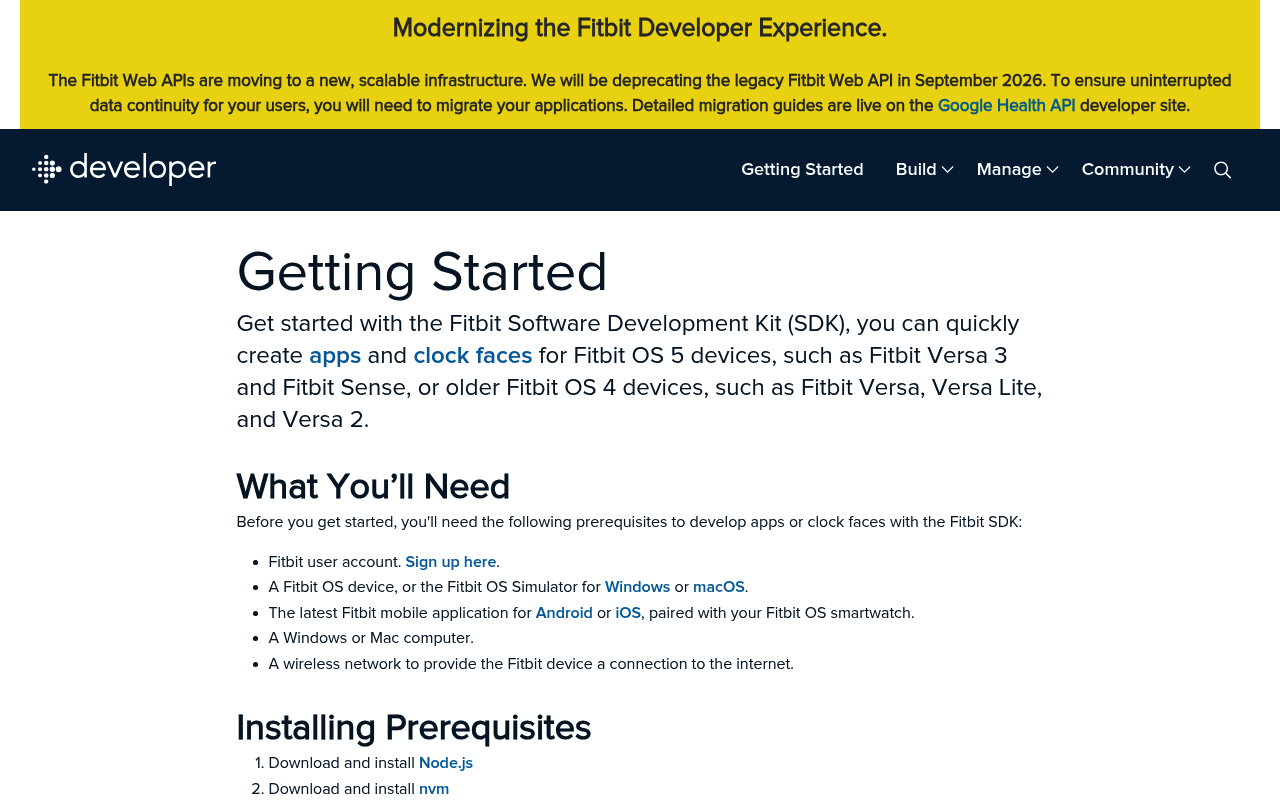
Fitbit is a wearable health and fitness platform — devices (trackers, smartwatches, smart scales) plus a companion mobile app and cloud data services. Founded in 2007 and acquired by Google in January 2021, Fitbit is now operated as part of Google's hardware portfolio alongside the Pixel Watch. The Fitbit Web API exposes user activity, exercise, heart rate (including intraday and HRV), sleep with stage breakdowns, body and weight, nutrition and water, devices, friends and leaderboards, and advanced sensor metrics — SpO2, breathing rate, skin and core temperature, ECG, Irregular Rhythm Notifications, and Cardio Fitness Score (VO2 Max). Authentication is OAuth 2.0 Authorization Code Grant with PKCE; default quota is 150 requests per hour per authorized user per app. A webhook subscription system streams sync notifications for the activities, body, foods, sleep, and userRevokedAccess collections. The Fitbit OS SDK lets developers ship apps and clock faces directly to Versa, Sense, and other Fitbit devices using JavaScript/CSS/SVG. The legacy Fitbit Web API is scheduled for deprecation in September 2026; new and migrated integrations should target the successor Google Health API at developers.google.com/health, which uses Google OAuth 2.0 and Google's modern infrastructure.
Fitbit publishes 3 APIs on the APIs.io network: User API, Foods API, and Oauth2 API. Tagged areas include Wearables, Health, Fitness, Activity Tracking, and Heart Rate.
The Fitbit catalog on APIs.io includes 1 event-driven AsyncAPI specification, 1 JSON-LD context, and 2 Spectral governance rulesets.
Fitbit’s developer surface includes authentication, developer portal, documentation, getting-started guide, support, signup flow, tooling, and 41 more developer resources.
11 APIs18 Features
On this page
Kin Score
APIs 3
Postman 3
Open Collections 15
Pricing Plans 1
Rate Limits 1
FinOps 1
Features 18
Event Specs 1
Vocabularies 1
Spectral Rules 2
JSON Schema 2
Security Posture 2
Scopes 1
Agentic Access 1
Resources 48
apis.yml
40 Operational Transparency
0 Create-or-Update Ergonomics
Composite quality — 60.1/100 · strong
Agent readiness — 30/100 · agent ready
Individual APIs this provider publishes, each with its own machine-readable definition.
Ready-to-run Postman collections for exercising this provider's APIs.
Open, tool-agnostic API collections (OpenAPI-derived and Bruno).
Scroll for all 15
Published pricing tiers and plan structures.
Documented rate limits and quota policies.
Cost, billing, and metering signals for API financial operations.
Notable capabilities this provider offers.
Wearable-native API surface covering activity, exercise, heart rate, sleep, body, nutrition, devices, and social
Advanced sensor data — SpO2, breathing rate, skin and core temperature, heart rate variability (RMSSD), VO2 Max
Electrocardiogram (ECG) readings and Irregular Rhythm Notifications (IRN) on supported devices
Active Zone Minutes (AZM) as Fitbit's modern engagement metric
Time-series endpoints with day, week, month, quarter, half-year, and year periods
Intraday endpoints (1-second / 1-minute / 5-minute / 15-minute resolution) on case-by-case approval
Webhook subscriptions for activities, body, foods, sleep, and userRevokedAccess — eliminates polling
OAuth 2.0 Authorization Code Grant with PKCE, plus Implicit Grant and Client Credentials (Commerce only)
Fine-grained scopes — activity, heartrate, location, nutrition, profile, settings, sleep, social, weight, oxygen_saturation, respiratory_rate, temperature, electrocardiogram, irregular_rhythm_notifications, cardio_fitness
Three application types — Personal (developer's own data), Client (mobile/single-page), Server (multi-user backend)
Default 150 requests-per-hour-per-user quota; 429 + Retry-After on overage
Fitbit OS SDK (JavaScript/CSS/SVG) for on-device apps and clock faces on Versa/Sense/Inspire/Charge devices
Fitbit SDK toolchain (TypeScript) and create-fitbit-app scaffolder published on GitHub
Fitbit Premium consumer tier ($9.99/month, $79.99/year) adds Daily Readiness, advanced sleep, mindfulness, workouts
Cross-platform mobile apps (iOS, Android) and Fitbit web dashboard
Acquired by Google in January 2021; now part of Google's hardware portfolio alongside Pixel Watch
Successor platform — Google Health API — launched on Google's modern infrastructure with Google OAuth 2.0
Legacy Fitbit Web API scheduled for turndown in September 2026; migration guides published on developers.google.com/health
Scroll for all 18
AsyncAPI definitions for this provider's event-driven and streaming APIs.
JSON-LD contexts and semantic vocabularies used across these APIs.
Spectral governance rulesets for linting and validating these APIs.
Standalone JSON Schema definitions for this provider's data models.
Authentication, domain security, vulnerability disclosure, and trust-center signals.
OAuth scopes governing access to this provider's APIs.
Recommended x-agentic-access execution contracts for AI agents.
Get Started 5
Portal, sign-up, and the first successful call
Documentation 7
Reference material describing how the API behaves
Scroll for all 7
Agent Surfaces 1
MCP servers, agent skills, and machine-readable catalogs
Design & Contract 2
Pagination, idempotency, versioning, errors, and events
Build 10
SDKs, sample code, and the tooling you integrate with
Scroll for all 10
Access & Security 3
Authentication, authorization, and security posture
Learn 1
Tutorials, courses, talks, and written guidance
Operate 7
Status, limits, changes, and where to get help
Scroll for all 7
Commercial 7
Pricing, plans, and the legal terms of use
Scroll for all 7
Company 5
The organization behind the API
Source (apis.yml)
aid: fitbit
url: https://raw.githubusercontent.com/api-evangelist/fitbit/refs/heads/main/apis.yml
apis:
- aid: fitbit:fitbit-user-api
  name: Fitbit User API
  tags:
  - User
  - Profiles
  - Settings
  tags_raw:
  - User
  - Profile
  - Settings
  humanURL: https://dev.fitbit.com/build/reference/web-api/user/
  properties:
  - url: https://dev.fitbit.com/build/reference/web-api/user/
    type: Documentation
  - url: openapi/fitbit-user-api-openapi.yml
    type: OpenAPI
  description: Read and update the authorized Fitbit user's profile including display name, gender, birthday, height, weight,
    locale, timezone, and unit preferences (distance, weight, water, glucose, temperature).
- aid: fitbit:fitbit-foods-api
  name: Fitbit Foods API
  description: The Foods API from Fitbit — 1 operation(s) for foods.
  humanURL: https://dev.fitbit.com/build/reference/web-api/activity/
  tags:
  - Food
  tags_raw:
  - Foods
  properties:
  - type: OpenAPI
    url: openapi/fitbit-foods-api-openapi.yml
  - type: Documentation
    url: https://dev.fitbit.com/build/reference/web-api/activity/
  - type: Documentation
    url: https://dev.fitbit.com/build/reference/web-api/active-zone-minutes-timeseries/
  - type: JSONSchema
    url: json-schema/fitbit-activity-summary-schema.json
  - type: JSONLD
    url: json-ld/fitbit-context.jsonld
  - type: Documentation
    url: https://dev.fitbit.com/build/reference/web-api/heartrate-timeseries/
  - type: Documentation
    url: https://dev.fitbit.com/build/reference/web-api/intraday/
  - type: Documentation
    url: https://dev.fitbit.com/build/reference/web-api/sleep/
  - type: JSONSchema
    url: json-schema/fitbit-sleep-log-schema.json
  - type: Documentation
    url: https://dev.fitbit.com/build/reference/web-api/body/
  - type: Documentation
    url: https://dev.fitbit.com/build/reference/web-api/nutrition/
  - type: Documentation
    url: https://dev.fitbit.com/build/reference/web-api/devices/
  - type: Documentation
    url: https://dev.fitbit.com/build/reference/web-api/subscription/
  - type: AsyncAPI
    url: asyncapi/fitbit-subscriptions-asyncapi.yml
  - type: Documentation
    url: https://dev.fitbit.com/build/reference/web-api/friends/
  - type: Documentation
    url: https://dev.fitbit.com/build/reference/web-api/spo2/
  - type: Documentation
    url: https://dev.fitbit.com/build/reference/web-api/breathing-rate/
  - type: Documentation
    url: https://dev.fitbit.com/build/reference/web-api/temperature/
  - type: Documentation
    url: https://dev.fitbit.com/build/reference/web-api/heartrate-variability/
  - type: Documentation
    url: https://dev.fitbit.com/build/reference/web-api/cardio-fitness-score/
  - type: Documentation
    url: https://dev.fitbit.com/build/reference/web-api/electrocardiogram/
  - type: Documentation
    url: https://dev.fitbit.com/build/reference/web-api/irregular-rhythm-notifications/
  - type: Documentation
    url: https://dev.fitbit.com/build/reference/web-api/authorization/
- aid: fitbit:fitbit-oauth2-api
  name: Fitbit Oauth2 API
  description: The Oauth2 API from Fitbit — 4 operation(s) for oauth2.
  humanURL: https://dev.fitbit.com/build/reference/web-api/user/
  tags:
  - Authentication
  tags_raw:
  - Oauth2
  properties:
  - type: OpenAPI
    url: openapi/fitbit-oauth2-api-openapi.yml
  - type: Documentation
    url: https://dev.fitbit.com/build/reference/web-api/activity/
  - type: Documentation
    url: https://dev.fitbit.com/build/reference/web-api/active-zone-minutes-timeseries/
  - type: JSONSchema
    url: json-schema/fitbit-activity-summary-schema.json
  - type: JSONLD
    url: json-ld/fitbit-context.jsonld
  - type: Documentation
    url: https://dev.fitbit.com/build/reference/web-api/heartrate-timeseries/
  - type: Documentation
    url: https://dev.fitbit.com/build/reference/web-api/intraday/
  - type: Documentation
    url: https://dev.fitbit.com/build/reference/web-api/sleep/
  - type: JSONSchema
    url: json-schema/fitbit-sleep-log-schema.json
  - type: Documentation
    url: https://dev.fitbit.com/build/reference/web-api/body/
  - type: Documentation
    url: https://dev.fitbit.com/build/reference/web-api/nutrition/
  - type: Documentation
    url: https://dev.fitbit.com/build/reference/web-api/devices/
  - type: Documentation
    url: https://dev.fitbit.com/build/reference/web-api/subscription/
  - type: AsyncAPI
    url: asyncapi/fitbit-subscriptions-asyncapi.yml
  - type: Documentation
    url: https://dev.fitbit.com/build/reference/web-api/friends/
  - type: Documentation
    url: https://dev.fitbit.com/build/reference/web-api/spo2/
  - type: Documentation
    url: https://dev.fitbit.com/build/reference/web-api/breathing-rate/
  - type: Documentation
    url: https://dev.fitbit.com/build/reference/web-api/temperature/
  - type: Documentation
    url: https://dev.fitbit.com/build/reference/web-api/heartrate-variability/
  - type: Documentation
    url: https://dev.fitbit.com/build/reference/web-api/cardio-fitness-score/
  - type: Documentation
    url: https://dev.fitbit.com/build/reference/web-api/electrocardiogram/
  - type: Documentation
    url: https://dev.fitbit.com/build/reference/web-api/irregular-rhythm-notifications/
  - type: Documentation
    url: https://dev.fitbit.com/build/reference/web-api/authorization/
name: Fitbit
tags:
- Wearables
- Health
- Fitness
- Activity Tracking
- Heart Rate
- Sleep
- Google
- IoT
- Wellness
tags_raw:
- Wearable
- Health
- Fitness
- Activity Tracking
- Heart Rate
- Sleep
- Google
- IoT
- Wellness
kind: contract
deliveryModel:
  model: saas
  open_source: false
  commercial: true
  callable_host: true
  label: Hosted service · you call their endpoint
  confidence: high
  source:
  - openapi
  - pricing
  generated: '2026-08-28'
  method: derived
accessModel:
  pricing: freemium
  onboarding: self-serve
  trial: false
  try_now: true
  public: false
  label: Freemium · Self-serve signup
  confidence: high
  source:
  - plans
  - authentication
  generated: '2026-07-22'
  method: derived
image: https://kinlane-images.s3.amazonaws.com/shared/apis-json/icons/fitbit.png
access: 3rd-Party
common:
- type: Website
  url: https://fitbit.com
- type: PostmanWorkspace
  url: https://www.postman.com/kinlaneapi/fitbit/overview
- type: AgenticAccess
  url: agentic-access/fitbit-agentic-access.yml
- type: DomainSecurity
  url: security/fitbit-domain-security.yml
- type: Authentication
  url: authentication/fitbit-authentication.yml
- type: OAuthScopes
  url: scopes/fitbit-scopes.yml
- url: https://www.fitbit.com
  type: Portal
- url: https://dev.fitbit.com/
  name: Fitbit Developer Portal
  type: Portal
- url: https://dev.fitbit.com/build/reference/web-api/
  name: Web API Reference
  type: Documentation
- url: https://dev.fitbit.com/build/reference/device-api/
  name: Device API Reference (Fitbit OS SDK)
  type: Documentation
- url: https://dev.fitbit.com/getting-started/
  name: Getting Started with the Fitbit Web API
  type: GettingStarted
- url: https://dev.fitbit.com/build/reference/web-api/authorization/
  name: OAuth 2.0 Authorization
  type: Documentation
- url: https://dev.fitbit.com/build/reference/web-api/troubleshooting-guide/
  name: Troubleshooting Guide
  type: Support
- url: https://dev.fitbit.com/build/reference/web-api/troubleshooting-guide/error-handling/
  name: Error Handling
  type: ErrorCodes
- url: https://dev.fitbit.com/build/reference/web-api/troubleshooting-guide/error-messages/
  name: HTTP Status Codes
  type: ErrorCodes
- url: https://dev.fitbit.com/build/reference/web-api/rate-limits/
  name: Rate Limits
  type: RateLimits
- url: https://dev.fitbit.com/build/reference/web-api/intraday/
  name: Intraday Access
  type: Documentation
- url: https://dev.fitbit.com/build/reference/web-api/subscription/
  name: Subscriptions (Webhooks)
  type: Documentation
- url: https://dev.fitbit.com/apps/
  name: Application Management
  type: Signup
- url: https://github.com/Fitbit
  name: Fitbit GitHub Organization
  type: GitHubOrganization
- url: https://github.com/Fitbit/fitbit-sdk-toolchain
  name: Fitbit SDK Toolchain
  type: SDKs
- url: https://github.com/Fitbit/create-fitbit-app
  name: create-fitbit-app
  type: SDKs
- url: https://github.com/Fitbit/developer-bridge
  name: Fitbit Developer Bridge
  type: Tools
- url: https://github.com/Fitbit/sdk-oauth
  name: Fitbit SDK OAuth Sample
  type: CodeExamples
- url: https://github.com/Fitbit/sdk-hr-meter
  name: Fitbit SDK Heart Rate Meter Sample
  type: CodeExamples
- url: https://github.com/Fitbit/ossapps
  name: Open Source Fitbit Apps
  type: CodeExamples
- url: https://github.com/Fitbit/golden-gate
  name: Golden Gate (BLE IP stack)
  type: Tools
- url: https://github.com/Fitbit/bitgatt
  name: BitGatt (Android BLE state machine)
  type: Tools
- url: https://www.fitbit.com/global/us/products/premium
  name: Fitbit Premium
  type: Plans
- url: https://store.google.com/category/watches_trackers
  name: Fitbit Devices at Google Store
  type: Pricing
- url: https://www.linkedin.com/company/fitbit
  type: LinkedIn
- url: https://twitter.com/fitbit
  type: Twitter
- url: https://www.youtube.com/user/fitbit
  type: YouTube
- url: https://help.fitbit.com/
  name: Fitbit Help Center
  type: Support
- url: https://community.fitbit.com/
  name: Fitbit Community
  type: Forums
- url: https://community.fitbit.com/t5/Web-API-Development/bd-p/dev
  name: Fitbit Web API Development Forum
  type: Forums
- url: https://www.fitbit.com/global/us/legal/terms-of-service
  type: TermsOfService
- url: https://www.fitbit.com/global/us/legal/privacy-policy
  type: PrivacyPolicy
- url: https://dev.fitbit.com/legal/platform-terms-of-service/
  name: Fitbit Platform Terms of Service
  type: TermsOfService
- url: https://developers.google.com/health
  name: Google Health API (Successor Platform)
  type: Documentation
- url: https://developers.google.com/health/migration
  name: Google Health API Migration Guide
  type: Documentation
- url: https://developers.google.com/health/release-notes
  name: Google Health API Release Notes
  type: ChangeLog
- url: https://community.fitbit.com/t5/Web-API-Development/Introducing-the-next-phase-of-the-Fitbit-Web-API/td-p/5821061
  name: Introducing the Next Phase of the Fitbit Web API
  type: Blog
- url: https://about.google/intl/en/products/devices-services/fitbit/
  name: Fitbit at Google
  type: Portal
- url: https://blog.google/products/fitbit/
  name: The Keyword — Fitbit Blog
  type: Blog
- url: plans/fitbit-plans-pricing.yml
  type: Plans
- url: rate-limits/fitbit-rate-limits.yml
  type: RateLimits
- url: finops/fitbit-finops.yml
  type: FinOps
- type: Features
  data:
  - Wearable-native API surface covering activity, exercise, heart rate, sleep, body, nutrition, devices, and social
  - Advanced sensor data — SpO2, breathing rate, skin and core temperature, heart rate variability (RMSSD), VO2 Max
  - Electrocardiogram (ECG) readings and Irregular Rhythm Notifications (IRN) on supported devices
  - Active Zone Minutes (AZM) as Fitbit's modern engagement metric
  - Time-series endpoints with day, week, month, quarter, half-year, and year periods
  - Intraday endpoints (1-second / 1-minute / 5-minute / 15-minute resolution) on case-by-case approval
  - Webhook subscriptions for activities, body, foods, sleep, and userRevokedAccess — eliminates polling
  - OAuth 2.0 Authorization Code Grant with PKCE, plus Implicit Grant and Client Credentials (Commerce only)
  - Fine-grained scopes — activity, heartrate, location, nutrition, profile, settings, sleep, social, weight, oxygen_saturation,
    respiratory_rate, temperature, electrocardiogram, irregular_rhythm_notifications, cardio_fitness
  - Three application types — Personal (developer's own data), Client (mobile/single-page), Server (multi-user backend)
  - Default 150 requests-per-hour-per-user quota; 429 + Retry-After on overage
  - Fitbit OS SDK (JavaScript/CSS/SVG) for on-device apps and clock faces on Versa/Sense/Inspire/Charge devices
  - Fitbit SDK toolchain (TypeScript) and create-fitbit-app scaffolder published on GitHub
  - Fitbit Premium consumer tier ($9.99/month, $79.99/year) adds Daily Readiness, advanced sleep, mindfulness, workouts
  - Cross-platform mobile apps (iOS, Android) and Fitbit web dashboard
  - Acquired by Google in January 2021; now part of Google's hardware portfolio alongside Pixel Watch
  - Successor platform — Google Health API — launched on Google's modern infrastructure with Google OAuth 2.0
  - Legacy Fitbit Web API scheduled for turndown in September 2026; migration guides published on developers.google.com/health
  sources:
  - https://dev.fitbit.com/
  - https://dev.fitbit.com/build/reference/web-api/
  - https://dev.fitbit.com/build/reference/web-api/authorization/
  - https://dev.fitbit.com/build/reference/web-api/intraday/
  - https://dev.fitbit.com/build/reference/web-api/subscription/
  - https://developers.google.com/health
  - https://community.fitbit.com/t5/Web-API-Development/Introducing-the-next-phase-of-the-Fitbit-Web-API/td-p/5821061
  - https://github.com/Fitbit
  updated: '2026-05-25'
created: '2026-05-25T00:00:00.000Z'
modified: '2026-09-16'
position: Consuming
description: 'Fitbit is a wearable health and fitness platform — devices (trackers, smartwatches, smart scales) plus a

  companion mobile app and cloud data services. Founded in 2007 and acquired by Google in January 2021,

  Fitbit is now operated as part of Google''s hardware portfolio alongside the Pixel Watch. The Fitbit Web API

  exposes user activity, exercise, heart rate (including intraday and HRV), sleep with stage breakdowns, body

  and weight, nutrition and water, devices, friends and leaderboards, and advanced sensor metrics — SpO2,

  breathing rate, skin and core temperature, ECG, Irregular Rhythm Notifications, and Cardio Fitness Score

  (VO2 Max). Authentication is OAuth 2.0 Authorization Code Grant with PKCE; default quota is 150 requests

  per hour per authorized user per app. A webhook subscription system streams sync notifications for the

  activities, body, foods, sleep, and userRevokedAccess collections. The Fitbit OS SDK lets developers ship

  apps and clock faces directly to Versa, Sense, and other Fitbit devices using JavaScript/CSS/SVG. The

  legacy Fitbit Web API is scheduled for deprecation in September 2026; new and migrated integrations should

  target the successor Google Health API at developers.google.com/health, which uses Google OAuth 2.0 and

  Google''s modern infrastructure.

  '
maintainers:
- FN: Kin Lane
  email: info@apievangelist.com
  X: apievangelist
  url: https://apievangelist.com
specificationVersion: '0.23'
Every provider here is available over the APIs.io API and to AI agents over MCP.
MCP server
One button, every client — Claude, Cursor, VS Code and the rest.
https://apis.io/mcp
Tools for providers
9 MCP tools reach this
find_providersBrowse and filter every provider in the catalog. get_provider_artifactsEvery artifact this provider publishes, grouped by type. get_provider_operationsEvery operation across all of their OpenAPIs — one call instead of parsing every spec. get_provider_toolsEvery MCP tool they ship, with the operation each wraps. get_provider_evidenceHow each part of their score was established. Free — the basis for a claim should not sit behind it. get_provider_ratingPRO — composite, band, trend and facet scores. apis_io_searchSTART HERE — APIs, providers and tags for one query, each with its total. resolveTurn a domain, URL or GitHub org into the provider it belongs to. find_cohortsEvery scored population of providers in the catalog.
All 92 tools →
Call it yourself
curl for this page
This provider
curl "https://apis.io/api/v1/providers/fitbit"
All providers
curl "https://apis.io/api/v1/providers?limit=25"
Every operation they expose
curl "https://apis.io/api/v1/providers/fitbit/operations?limit=25"
How their score was established
curl "https://apis.io/api/v1/providers/fitbit/evidence"
Discovery needs no key. Ratings and market analysis are Pro.
Get an API key
Free tier, no form to fill in. Signing in shares your email address with us — we
store it to create your key and to recognise you if you sign in with another
provider. See our Privacy Policy and
Terms .
A second provider on the same verified email joins the account you already have.
 Kin Score
How this is scored →
Kin Score
How this is scored →