Hivemapper
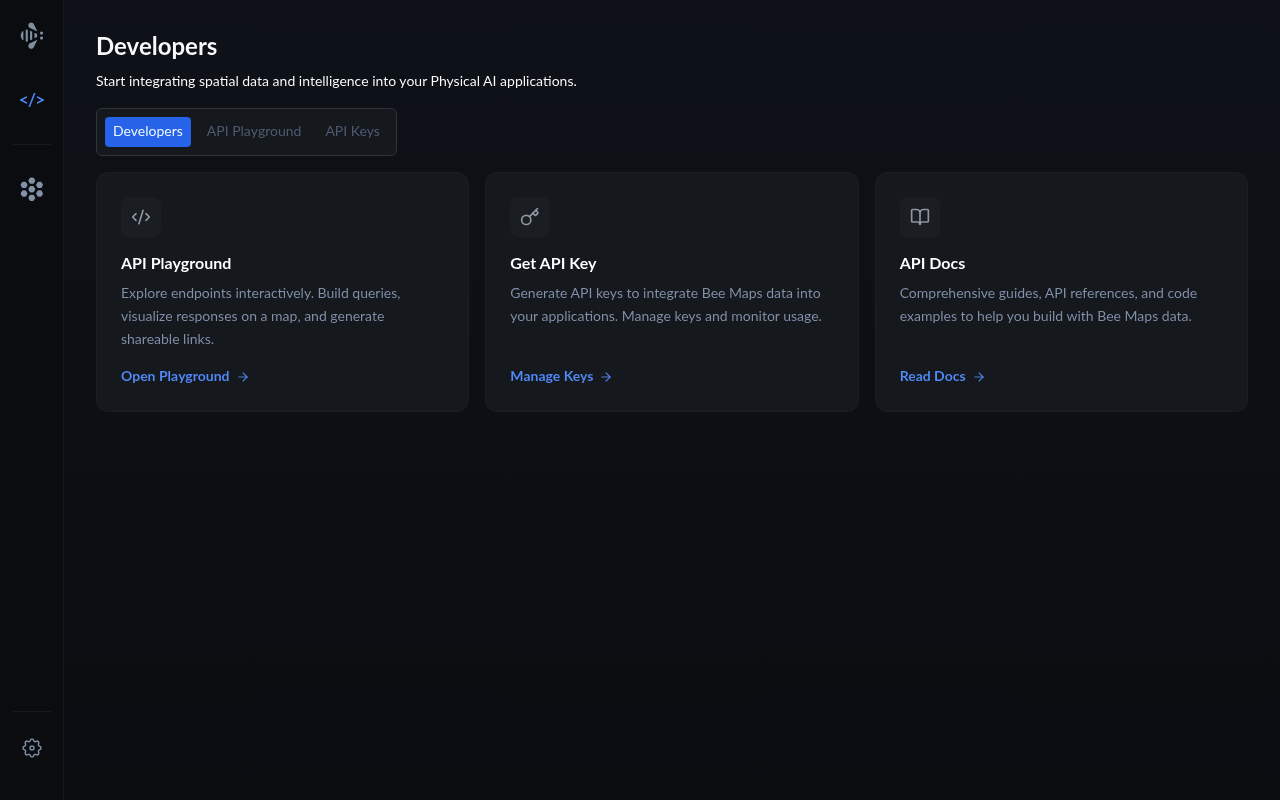
Hivemapper (Bee Maps) is a decentralized mapping network that turns a planetary-scale fleet of purpose-built "Bee" dashcams into fresh, structured, queryable street-level data. Contributors passively collect imagery while driving and earn HONEY tokens on Solana; the data is processed through on-device and cloud ML pipelines and delivered to developers as REST APIs. The Bee Maps Developer API offers a Street-Level Imagery API, a Map Features API (ML-detected signs, hydrants, lane lines and more), an AI Event Videos API (harsh braking, swerving, violations with synchronized sensor data), and Burst on-demand mapping, plus Edge AI for deploying custom ML workloads to cameras. Enterprise customers include HERE Technologies, Lyft, Mapbox, and Volkswagen. Billing is consumption-based (API credits plus per-view metering).
Hivemapper is listed with 5 APIs on the APIs.io network, including Account API, AI Events API, Bursts API, and 2 more. Tagged areas include Company, Logistics, Mapping, Geospatial, and Imagery.
Hivemapper’s developer surface includes documentation, API reference, getting-started guide, pricing, signup flow, engineering blog, support, and 19 more developer resources.
Kin Score
 Kin Score
How this is scored →
Kin Score
How this is scored →scored 2026-10-17 · rubric v0.24.0
APIs 5
Individual APIs this provider publishes, each with its own machine-readable definition.
Hivemapper Account API
Devices, calibration, and query history.
Hivemapper AI Events API
AI-detected driving event videos with synchronized sensor data.
Hivemapper Bursts API
On-demand incentivized mapping requests.
Hivemapper Imagery API
Street-level dashcam imagery queries.
Hivemapper Map Features API
ML-detected road objects and features.
Open Collections 6
Open, tool-agnostic API collections (OpenAPI-derived and Bruno).
API Collection
OPEN COLLECTIONBee Maps (Hivemapper) Developer Account API
OPEN COLLECTIONBee Maps (Hivemapper) Developer Account AI Events API
OPEN COLLECTIONBee Maps (Hivemapper) Developer Account Bursts API
OPEN COLLECTIONBee Maps (Hivemapper) Developer Account Imagery API
OPEN COLLECTIONBee Maps (Hivemapper) Developer Account Map Features API
OPEN COLLECTIONMCP Servers 1
Model Context Protocol servers that expose these APIs to AI agents.
Hivemapper MCP Server
Bee Maps exposes an MCP Streamable HTTP endpoint on the Developer API that accepts JSON-RPC messages. Authentication is via the apiKey parameter (the same API key used for the R...
MCP SERVERPricing Plans 1
Published pricing tiers and plan structures.
OpenAPI Overlays 1
Overlays applied on top of this provider's contracts. Each card says who wrote it: a document the provider publishes, or one API Evangelist derived or generated.
Hivemapper Beemaps Overlay
UNRECORDEDSecurity Posture 2
Authentication, domain security, vulnerability disclosure, and trust-center signals.
Resources
Get Started 4
Portal, sign-up, and the first successful call
Documentation 2
Reference material describing how the API behaves
Agent Surfaces 4
MCP servers, agent skills, and machine-readable catalogs
Build 4
SDKs, sample code, and the tooling you integrate with
Access & Security 1
Authentication, authorization, and security posture
Operate 2
Status, limits, changes, and where to get help
Commercial 4
Pricing, plans, and the legal terms of use
Company 3
The organization behind the API
Other 2
Properties that don't map to a standard resource type
Source (apis.yml)
Work with this as data
Every provider here is available over the APIs.io API and to AI agents over MCP.