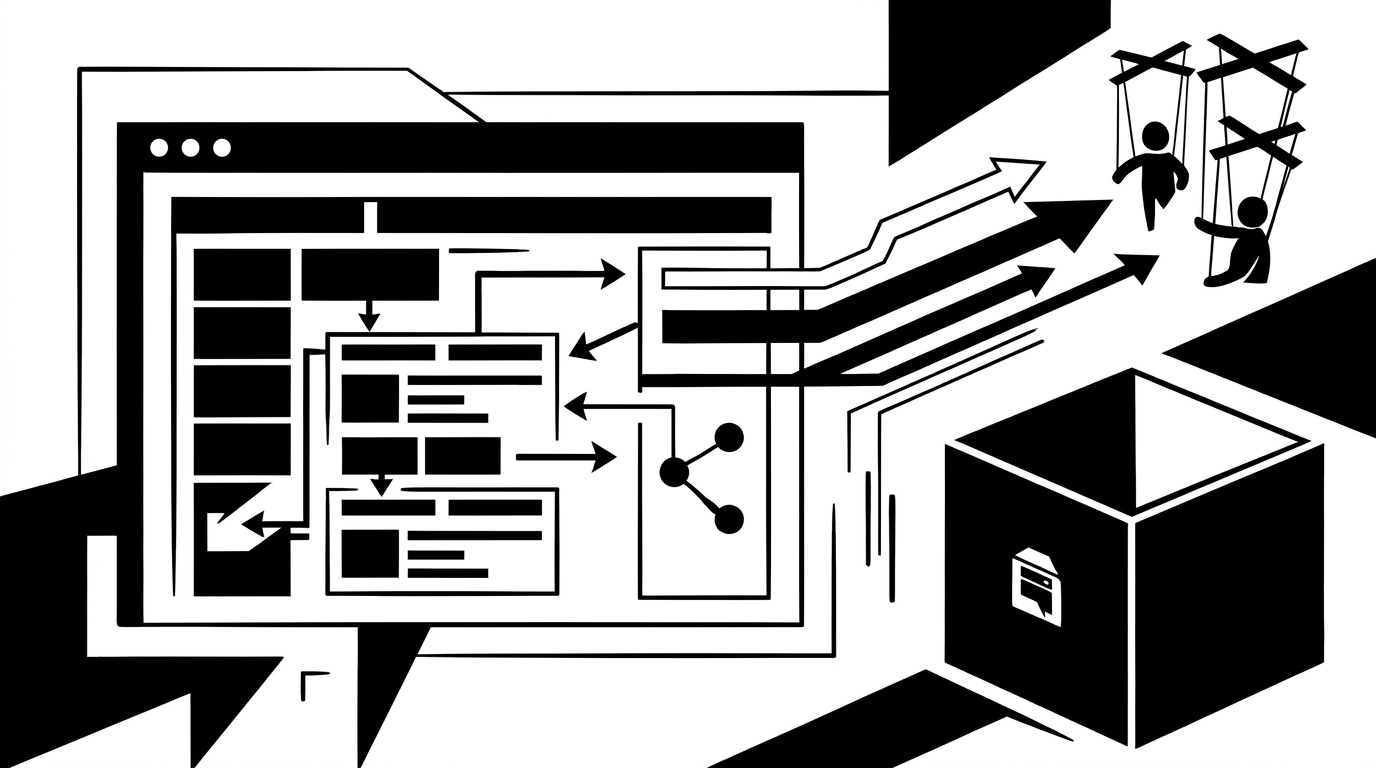
HTML/CSS to Image published a tutorial on automating Puppeteer with MCP that is more careful than most of the genre. It wires Chrome DevTools MCP into an assistant, serves a three-order demo dashboard on 127.0.0.1, and asks the agent to click “Ready orders” and return the visible rows as JSON. The correct answer is two orders, RS-1042 and RS-1044, and the point of the exercise is the third one: RS-1043 is still in the document, hidden by the filter, and an extraction that reads every table row will happily include it. The line worth keeping is “A successful click isn’t the same as a successful task.”
There is no vendor figure to discount here, which is rare. The advice is sound and specific: run the browser with --isolated so the agent never touches your everyday profile, tell the assistant not to read the fixture from disk or it will answer without exercising the filter, never hard-code an element identifier from an earlier snapshot, and treat instructions found inside a page as page content rather than permission. It also says the honest thing about the protocol: installing a server called “Puppeteer MCP” does not give you every Puppeteer method. Once the job is understood, the tutorial tells you to put it in a script, which is the right ending for a recurring task.
The tutorial closes by pointing readers who want image generation, not general browser control, to HCTI’s own MCP integration, which “exposes rendering and template operations directly.” Those are surfaces the catalog does hold. The HTML/CSS to Image record carries eight API pages, and the two that integration sits on are the HTML/CSS to Image Images API and the HTML/CSS to Image Templates API. The agentic access profile counts 14 operations, eight of them acting operations, which is exactly the set the tutorial’s warning about tool approval for consequential actions applies to.
The Kin Score is 30.3, thin. Discoverability (66.1) and contract quality (57.4) carry it; access clarity scores 7.9 and operational transparency 10.5. Agent Readiness is 33.3 with spec presence, agentic access, auth clarity, error semantics, examples and a rate-limit signal all lit, and mcp_server unlit. A company whose blog links its own MCP integration in the same post is scored as having none. Either the integration lives somewhere our probes do not look, or it is not discoverable from the places an agent would check first. Both are worth fixing, and the second is the one that costs HCTI customers.