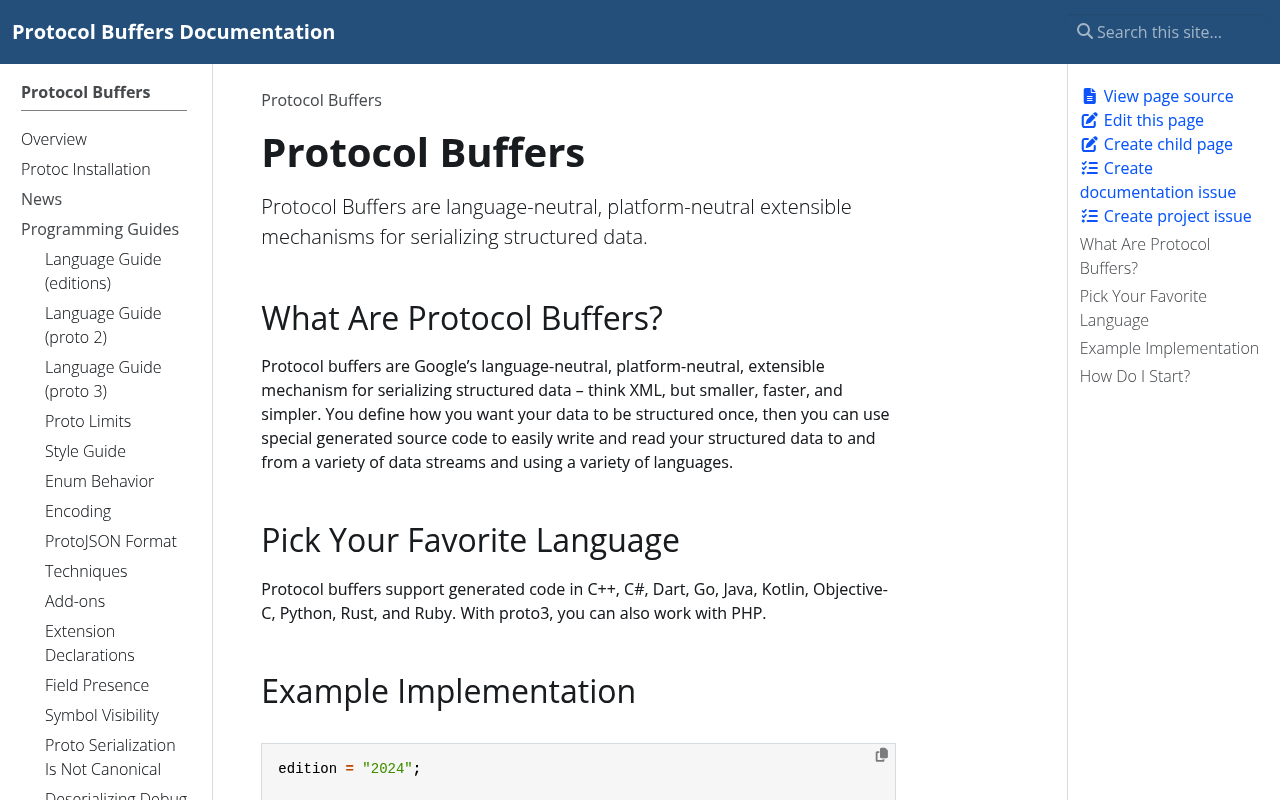
Binary Format
Binary format refers to data encoding and serialization methods that use binary rather than text representations, including formats like Protocol Buffers, MessagePack, Avro, Thrift, CBOR, and others used in APIs and data storage systems for efficiency. Binary formats offer significant advantages over text-based formats in terms of size, parsing speed, and type safety.
Binary Format is profiled on the APIs.io network. Tagged areas include Binary Format, Data Encoding, Protocol Buffers, Serialization, and MessagePack.
Kin Score
 Kin Score
How this is scored →
Kin Score
How this is scored →scored 2026-10-17 · rubric v0.24.0
Standards implemented 2
Standards this provider implements or carries. De facto ones are profiled and measured by the API Commons; formal ones come from the standards directory and are linked by the provider's own tags. The evidence column says how each claim was established — not that it was made.
Features 8
Notable capabilities this provider offers.
Protocol Buffers (protobuf)
Google's language-neutral, platform-neutral extensible serialization format with schema-first design.
MessagePack
Efficient binary serialization format that is JSON-compatible with smaller encoding size.
Apache Avro
Row-oriented remote procedure call and data serialization framework developed in Apache Hadoop.
Apache Thrift
Facebook-originated framework for scalable cross-language services development with binary transport.
CBOR (Concise Binary Object Representation)
IETF RFC 8949 binary data format based on JSON data model with compact encoding.
FlatBuffers
Google's cross-platform serialization library for memory-efficient access without parsing.
Cap'n Proto
Ultra-fast data interchange format and RPC system with zero-copy reads.
Apache Arrow
Cross-language columnar memory format for flat and hierarchical data.
Scroll for all 8
Use Cases 6
What developers build with this provider.
High-Performance API Communication
Using binary serialization to reduce payload size and parsing overhead in API calls.
gRPC Service Definition
Defining gRPC service contracts using Protocol Buffers IDL.
Event Streaming
Encoding Kafka and event streaming messages using Avro with Schema Registry.
IoT Data Transmission
Using compact binary formats like CBOR or MessagePack for bandwidth-constrained IoT devices.
Columnar Data Processing
Using Apache Arrow for zero-copy analytics across language boundaries.
Microservice Communication
Replacing JSON/XML with binary formats for internal microservice RPC efficiency.
Resources
Documentation 5
Reference material describing how the API behaves
Design & Contract 2
Pagination, idempotency, versioning, errors, and events
Other 1
Properties that don't map to a standard resource type
Source (apis.yml)
Work with this as data
Every provider here is available over the APIs.io API and to AI agents over MCP.