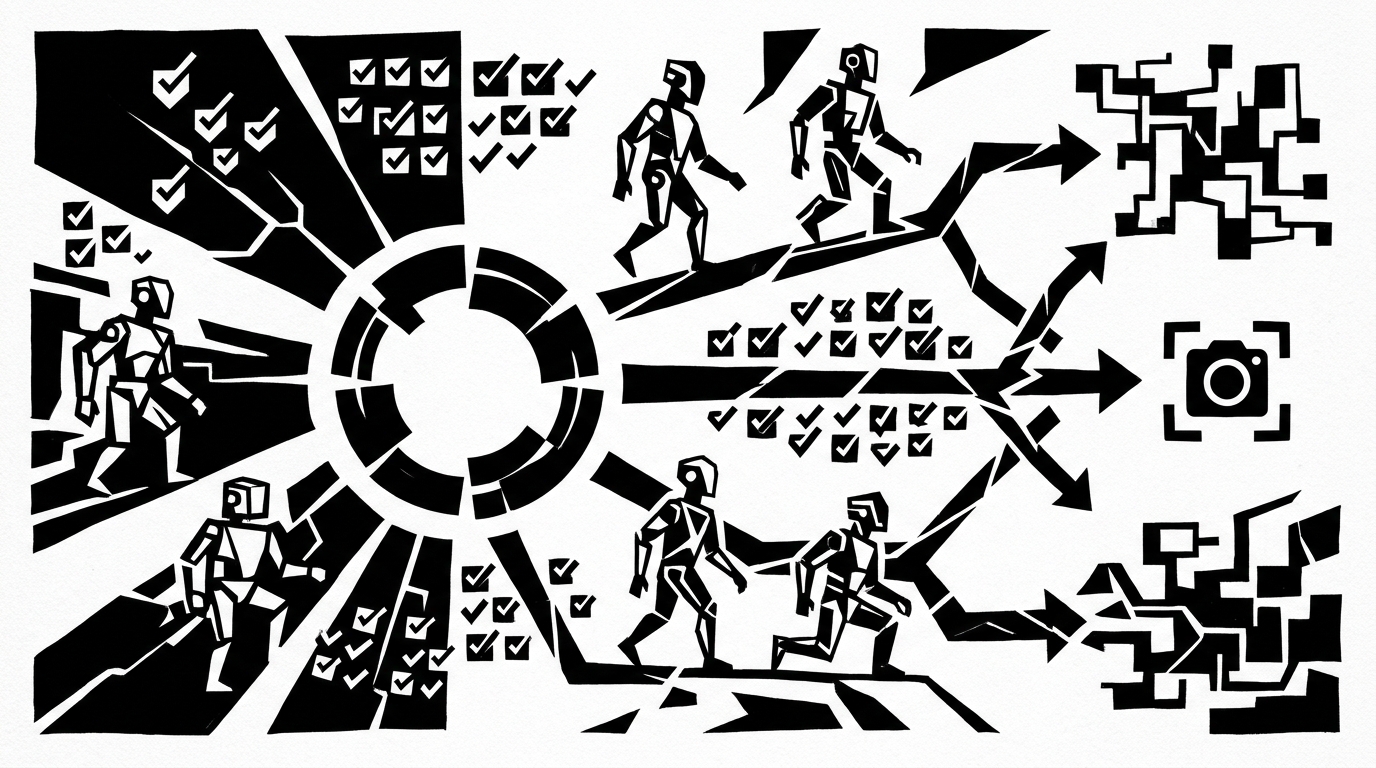
SnapRender asked AI coding agents to add screenshots 120 times in fresh repositories, with prompts that never named a library or a service. Claude Code with Haiku, Sonnet and Opus 5.5, plus Codex CLI, built six features: an Express endpoint, a FastAPI endpoint, a Next.js page, a batch script, a daily visual monitor and an agent tool. 90 runs wrote code, and every one of them self-hosted Playwright. Zero chose a hosted screenshot API, “including ours.”
The study is a vendor’s, and SnapRender says so: “We build a screenshot API, so we had a stake in the answer.” What survives is the method, which is public, and the reasoning the agents gave. Playwright is one install; a hosted API needs a signup, a key and an environment variable, “and an agent cannot sign up for you.” The limits are stated too: 16 Codex runs produced nothing because the account ran out of credits, and Sonnet asked clarifying questions in 11 runs. The finding that matters for every API provider, not just this one, is that the build-or-buy decision now happens in a few seconds inside an agent, and a one-line page.screenshot() wins it before cookie banners, lazy images and datacenter blocking show up in production.
SnapRender’s answer is to make the buy path as short as the build path: an agent trial key from one unauthenticated call, plugins for Claude Code, Cursor, Codex and Gemini CLI, and an MCP connector. The record for SnapRender maps the surface each of the study’s six tasks would have called: the snap-render-com Screenshot API for the endpoints and the agent tool, the snap-render-com Schedules API and snap-render-com Webhooks API for the daily pricing-page monitor, and the snap-render-com Usage API for the 200 free renders a month, a figure the post and the catalog description agree on.
On the rating, SnapRender scores 49.0, developing, carried by contract quality (71.3) and discoverability (66.1), with contract governance at 22.0 and operational transparency at 23.7. Agent Readiness is 46.4, agent-ready, and the lit dimensions line up with the study’s conclusions: agent skills, dynamic client registration, protected resource metadata, delegated identity and OpenAPI examples. Two dimensions do not. mcp_server is unlit despite the MCP connector the post promotes, and well_known_catalog is dark, which is the exact discovery path an agent deciding in seconds would need. The agentic access profile counts 23 operations. SnapRender measured why agents never find a screenshot API. The next measurement is whether they can find this one.