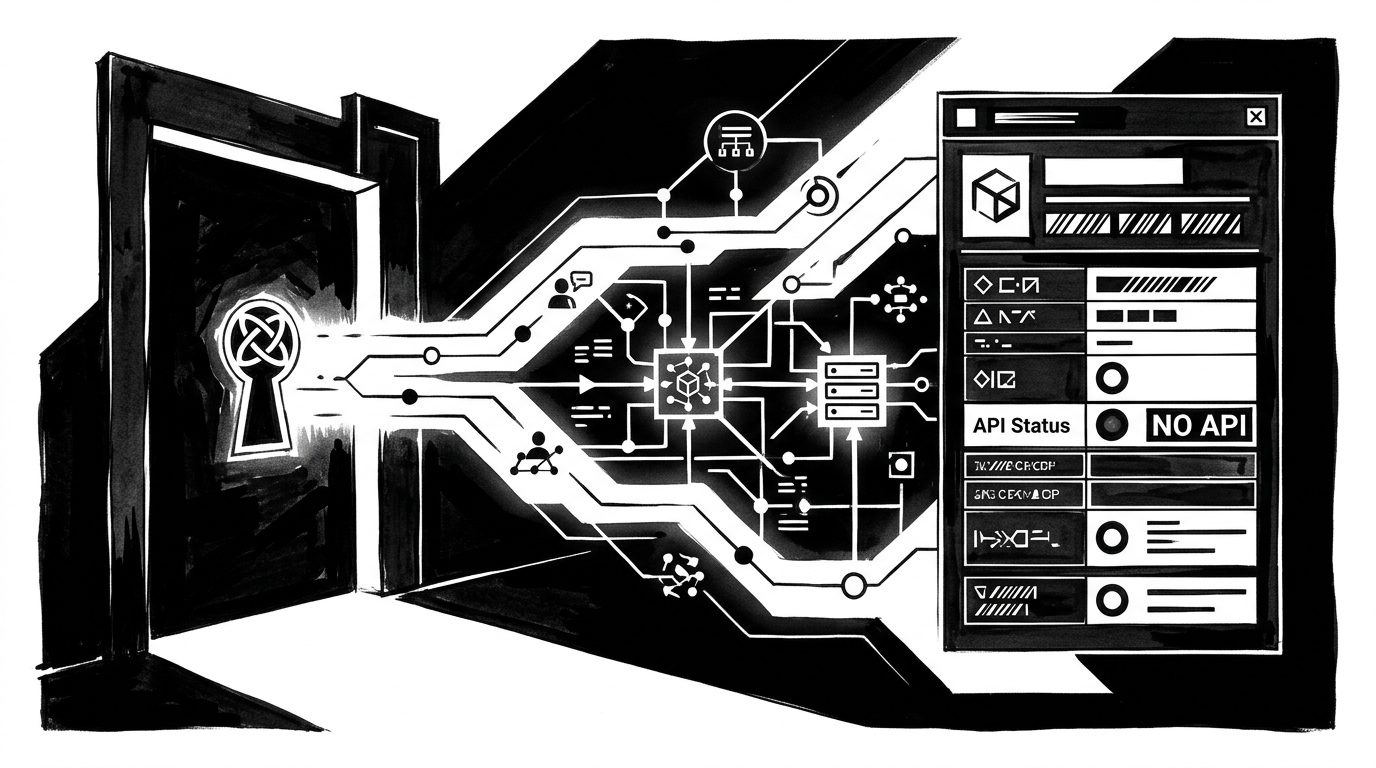
Hidden Door has put its world-building tools behind the Model Context Protocol. In Introducing the Hidden Door MCP Server, Chris Wallace describes a server that lets “the agents you already use to directly create, import, explore, and change worlds,” exposing the same capabilities creators already use in Atlas Studio on top of what the company calls its narrative world model. Four verbs organise it: create a world from an idea, adapt existing writing into one, explore a world by asking it questions, and adjust tone, characters, and storylines. The demonstration imports a Project Gutenberg copy of the Sleepy Hollow story and then folds a 1952 comic strip into it as a new storyline.
The useful claims are the boundaries, not the demo. “The MCP works on drafts,” the post says: the agent saves to your account, and “it does not publish worlds or start games.” Publishing and play stay in the human editor. Access requires a Creator plan and a browser sign-in on first connection, and the plugin installs both the MCP connection and a curated set of skills that steer the agent through the tools. It launches as a beta. A server that can write but cannot publish, with skills shipped alongside it, is a more careful first release than most consumer platforms manage.
The catalog has not caught up. The Hidden Door provider page has no API pages, and its record still says the company “publishes no developer API, SDK, or developer portal at this time.” That was true when it was written. The post now names a remote endpoint at https://www.hiddendoor.co/mcp, setup instructions on the site, and a public plugins repository, which is exactly the evidence the profile needs to be redone. We are treating this story as a re-profile lead rather than writing the missing pages by hand.
The Kin Score is 12.2, emerging band, with discoverability at 48.2 and access clarity at 31.6, and contract quality, contract governance, and operational transparency at 0.0. Agent Readiness is 0.0, human-only, with every dimension dark, the MCP server and agent skills included. Both of those are now measurements of the old Hidden Door. The company’s own post describes an agent surface with an auth flow, a scoped write boundary, and skills, three things the rubric rewards, and the gap between a 0.0 and that description is the length of time between a launch and the next profile.