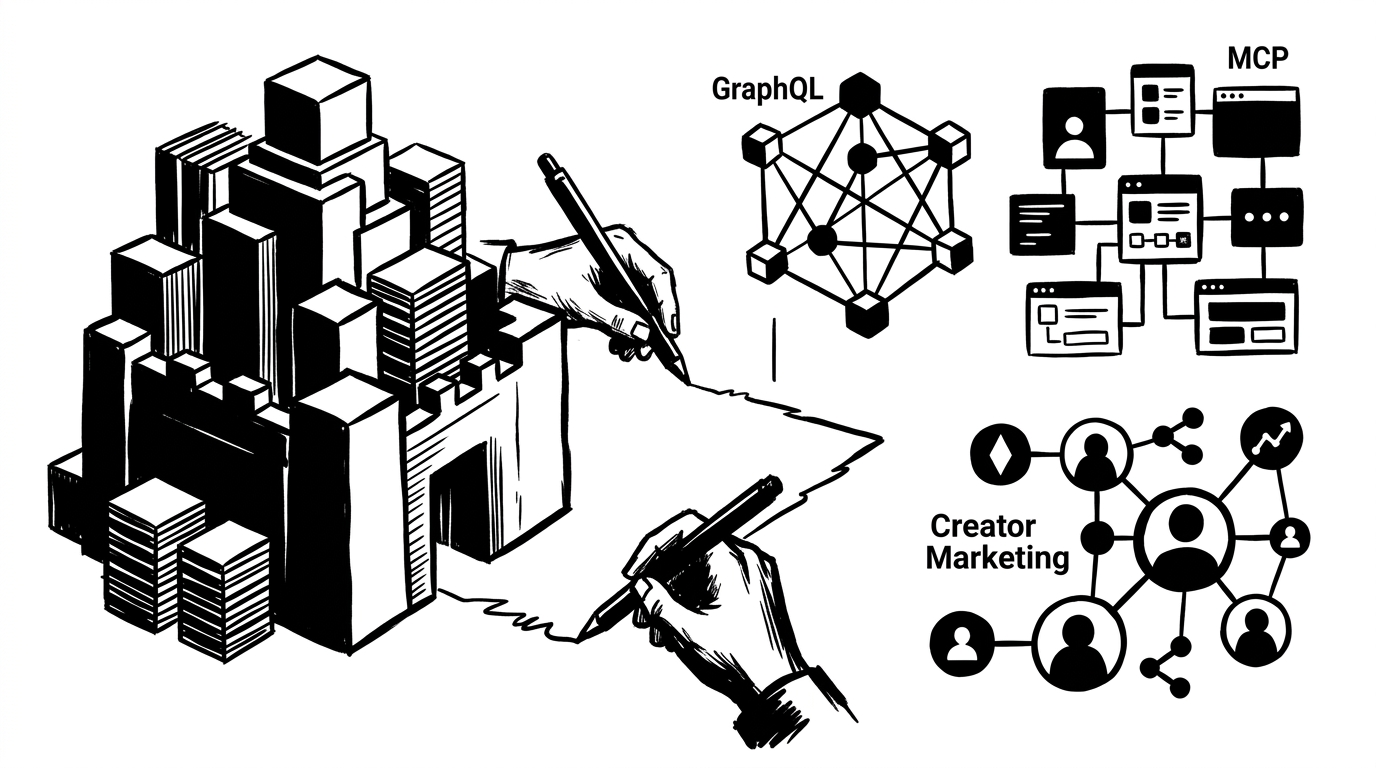
Archive published a help center page explaining what you can do with the Archive API, and the interesting half of it is the second list. After walking the reads — social content across Instagram, TikTok and YouTube, engagement metrics, creator profiles, CRM attributes, caption and transcription search — and the writes — adding and removing items from Collections, bulk-refreshing engagement, creating and deleting saved views, importing content from URLs — the page turns around and states plainly what the API will not do. It cannot create or delete content or creators, cannot send messages, cannot write custom attributes, cannot create or modify workspaces or campaigns, cannot send webhooks, and cannot “pull content that has not yet been captured by Archive.” Most vendors document a surface. Documenting its boundary is rarer and considerably more useful, because the boundary is the thing an integrator discovers at 2am otherwise.
The framing is worth taking seriously rather than as marketing, because there is nothing being sold in that second list — it is a page that reduces the apparent size of the product. The one claim to check is the missing webhook. An API with a read surface this wide and no event surface means every consumer polls, and the rate ceiling is where that shows up: the catalog records a flat 5 requests per second per workspace, alongside a per-workspace credit budget, signalled at runtime with IETF ratelimit headers. Publishing the headers is the right call. It also means the pacing of any integration built on this API is set by a limit the provider never has to explain, rather than by an event the provider could push.
The catalog’s record of Archive Technologies is one API page and a lot behind it. The Archive API is a GraphQL surface at a single POST endpoint carrying 53 operations — 29 queries and 24 mutations — over 135 types, authenticated with a workspace-scoped bearer token plus a WORKSPACE-ID header. Runtime introspection is disabled, which is a defensible security posture and also means the published reference is the only way anything, human or machine, learns the schema. That makes the help center page load-bearing. Archive also runs an OAuth-protected remote MCP server whose 53 tools map one-to-one onto the GraphQL operations, drawing on the same credit budget — the rare case where the agent door and the developer door are demonstrably the same door.
Archive scores 51.0, developing on the Kin Score, with access clarity and commercial clarity both at 69.7 and discoverability at 75.9, dragged down by contract governance at 4.5. Agent Readiness is 47.8, agent-ready, and the lit dimensions are unusual company to keep: delegated_identity, protected_resource_metadata and dynamic_client_registration are all lit, which almost nothing in the catalog can say, and they are lit because the MCP server was built with OAuth rather than a pasted key. event_surface_described is unlit, matching the help page’s own admission. So is agentic_access. Twenty-four mutations sit behind an agent-shaped door, and the catalog cannot yet read a statement of what happens when an agent walks through it twice.